
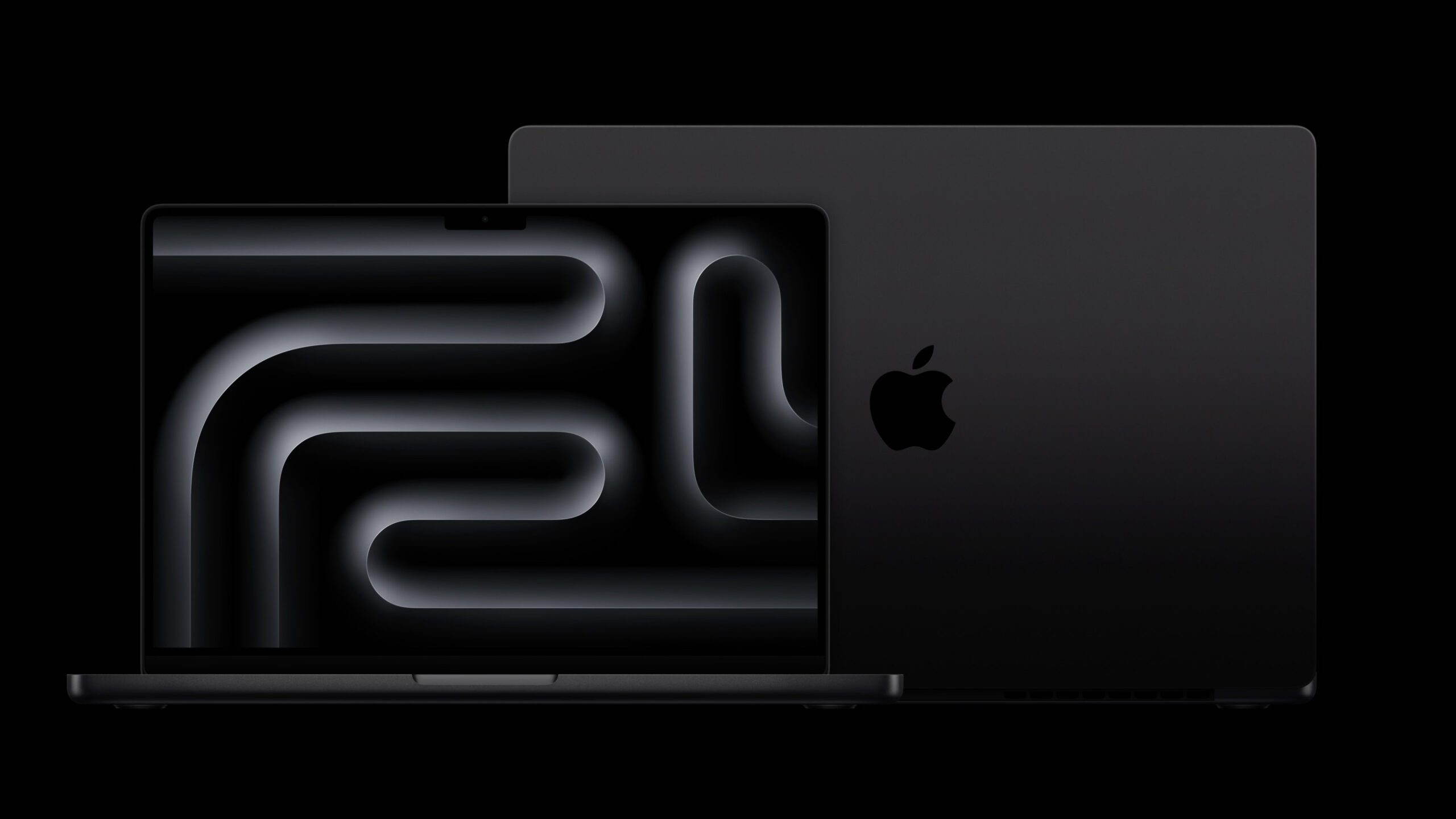
Apple has resisted touchscreens on its Mac notebooks for more than a decade, and that resistance ran deep. Steve Jobs famously insisted that touch interfaces don’t belong on a vertical screen. Tim Cook echoed that belief years later, comparing a touchscreen laptop to combining a toaster with a refrigerator. Despite that long-standing position, mounting evidence now suggests Apple is finally ready to change course. Reports point to October for Apple’s first touchscreen MacBook. The launch would land alongside a major MacBook Pro redesign, which may take on a new name: the MacBook Ultra.
Rumors deserve healthy skepticism, but this particular story has earned rare consensus. Industry insiders are lining up behind the rumor. Heavyweights like Mark Gurman, Ming-Chi Kuo, research firm Omdia, and leaker Instant Digital all point to the same release.
Apple has even dropped subtle hints inside macOS 27. The update adds touch support for Sidecar, pull-to-refresh gestures, and expanded menu bar spacing. On a 13-inch MacBook Air, that layout is already getting cramped as content spills around the notch. Far from random design tweaks, these software changes point directly to quiet groundwork for touch hardware.
Internally, the new models reportedly carry the codenames K114 for the 14-inch version and K116 for the 16-inch version. Samsung Display is set to supply the OLED panels as production ramps up in mid-to-late 2026. The timeline tracks with reports that Apple is actively testing the hardware on macOS 27.1 ahead of its late-October release.
On the hardware front, the redesigned MacBook Pro is expected to sport a Tandem OLED display. The tech matches the high-end panel used in the iPad Pro. Tandem OLED stacks two OLED layers together, producing richer colors, deeper contrast, and noticeably higher brightness than standard displays. The new model will feature a Dynamic Island—though a smaller version than the one on the iPhone. Current reports indicate that this new camera cutout will replace the notch entirely. Face ID, however, won’t come along for the ride.
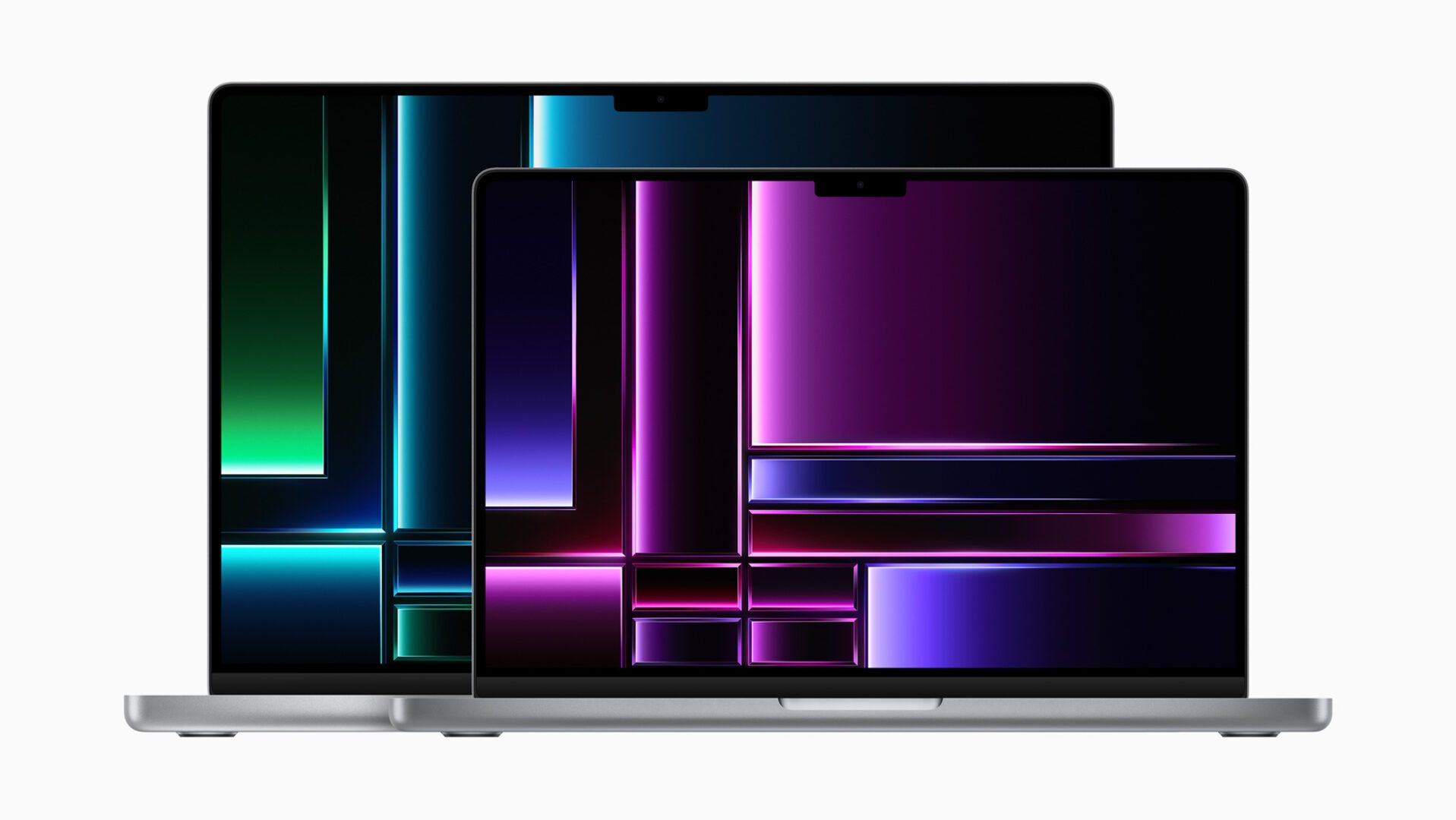
Image: Apple Newsroom
Software will adapt specifically for touch input as well. According to Gurman, tapping a control will trigger a new contextual menu right at your fingertip. The pop-up will instantly surface the most relevant touch commands for that specific action. The interface will also learn from a person’s prior interactions, adjusting which controls appear based on habit over time. Tapping an item in the top menu bar will enlarge the surrounding controls, making them easier to select with a finger instead of a cursor. Apple is reportedly framing this entire approach as touch-friendly rather than touch-first, meaning the touchscreen complements the keyboard and trackpad rather than replacing them outright.
Chip plans have shifted in an unexpected direction. Early reporting pointed to M6 Pro and M6 Max chips debuting inside this redesigned MacBook Pro, but Apple has reportedly skipped that entire generation to focus resources on accelerating M7 development instead. That decision means the first generation of 2nm chips won’t appear in this particular redesign. Instead, the new touchscreen MacBook Pro will ship with the existing M5 Pro and M5 Max chips. A base model won’t launch alongside it either, though Apple reportedly plans to introduce a standard MacBook Pro with an M7 chip as early as next spring.
Design changes extend to the chassis as well. Rumors suggest the new MacBook Pro will be slightly thinner and lighter than its predecessor, which had grown noticeably bulky over recent generations. Any meaningful reduction in size would likely please buyers, provided Apple doesn’t sacrifice thermal performance to achieve it.
Timing remains somewhat uncertain beyond the October target. Some reports suggest the launch could realistically land anywhere between October and December of 2026, or potentially slip into early 2027 instead. The ongoing global memory chip shortage plays a major role in that uncertainty, since Apple needs to secure enough memory components before committing to a firm release date. Notably, this laptop won’t debut at Apple’s September iPhone event. Instead, it will get its own dedicated launch window separate from the annual iPhone cycle.
Interestingly, an October release would also coincide with the MacBook Pro’s 20th anniversary since it originally launched back on January 10, 2006, adding a symbolic layer to the timing that several analysts have pointed out. The “Ultra” branding itself may reflect a broader shift happening across Apple’s entire product lineup, with reports suggesting the company plans to introduce Ultra-branded devices in multiple categories around the same period, including a rumored foldable iPhone Ultra.
Pricing will likely climb as well, following Apple’s price increases earlier this year tied to the ongoing memory shortage. Expect the 14-inch model to start around $2,499, with the 16-inch version starting closer to $2,999.
Taken together, Apple’s first touchscreen MacBook Pro looks like one of the most significant Mac releases in years. It blends a new display technology, deeply adaptive touch software, and a refined design into a single package, all while marking the end of a philosophy Apple held onto for more than a decade. Whether it launches this October or slips slightly beyond that window, the shift toward touch on the Mac now looks less like speculation and more like an inevitability.
Comments
Comments will load as you approach this section.