
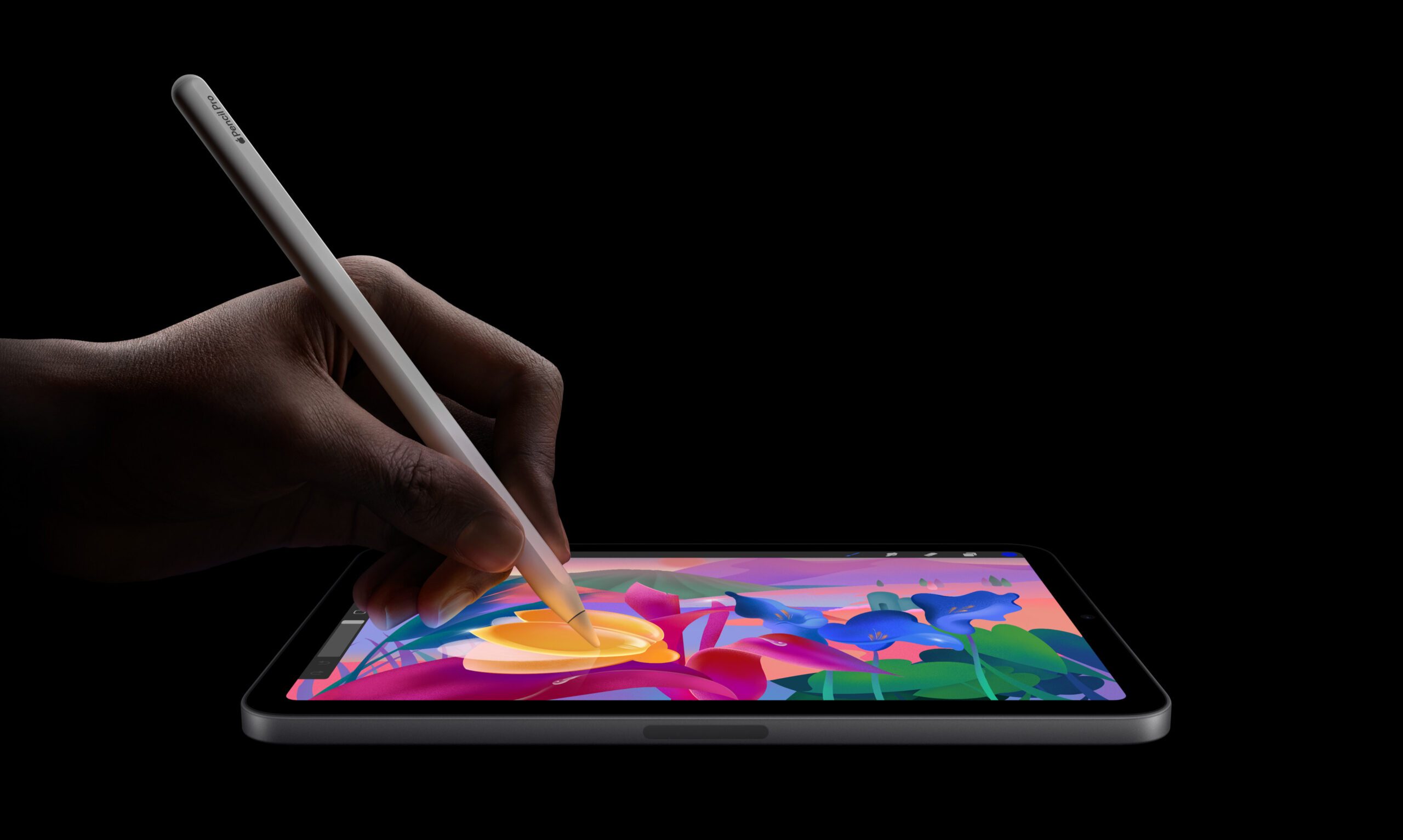
It has long been rumored that the next iPad mini will feature an OLED display, following suit of the iPad Pro and today’s iPhones. However, in a recent claim from an account with a mixed track record that goes by “yeux1122” on the Korean Naver blog, it appears that the next iPad mini may not match the specs of the cutting-edge technology from the iPad Pro’s displays. According to the source, supply chains suggested that the next iPad mini may come equipped with low-temperature polycrystalline silicon (LTPS) OLED panels with 60Hz refresh rates.
This would be substantial contrast from the industry-leading iPad Pro’s tandem OLED displays, which consist of two low-temperature polycrystalline oxide (LTPO) panels stacked together for improved brightness, color ratios, and efficiency.
If you were hoping for the next iPad mini to feature a 120Hz ProMotion display, this could be disappointing news for you. For what it’s worth, 60Hz displays have started to become so last wave. After all, Apple introduced ProMotion technology with up to 120Hz refresh rates on iPad Pro models introduced in 2017 (almost a decade ago!), and Apple brought that technology to both the iPhone 13 Pro models and the redesigned MacBook Pro with mini-LED displays in 2021. Even the regular iPhone 17 finally features ProMotion technology after that feature was exclusive to the Pro models for so long. On the other hand, the iPad Air continues to stick with a 60Hz display, so although it may come equipped with the M-series of chips, graphics overall may not appear “faster” due to the limited refresh rates. I’d much rather have Apple put 90Hz displays on lower-end products to bridge the gap a little bit, but only time will tell if that would happen.
Still, there’s light at the end of this tunnel as the leaker also claimed that Samsung Display is also manufacturing and testing A2 Generation 5.5 OLED displays for the next iPad mini, so not all hope is lost; we’ll just have to wait and see.
The next iPad mini will likely launch by the end of this year, potentially with at least the A20 Pro chip, and the expected display technology should still be a solid improvement in terms of brightness, contrast ratios, and efficiency.
Comments
Comments will load as you approach this section.