As you know, Apple celebrated its 50th anniversary earlier this month on April 1. The company was founded by both Steve Jobs and Steve Wozniak on April 1, 1976, so the company turned 50 this year. To commemorate this grand milestone, the Mimms Museum of Technology and Art just opened its newest exhibit on that same day. Officially dubbed “iNSPIRE: 50 Years of Innovation of Apple”, this spectacular exhibit explores the entire history of Apple during its first five decades. I even went to see the exhibit in person on the first weekend since it opened, so without further ado, I would love to share my entire experience when visiting the Mimms Museum for the very first time.
The Main Hall
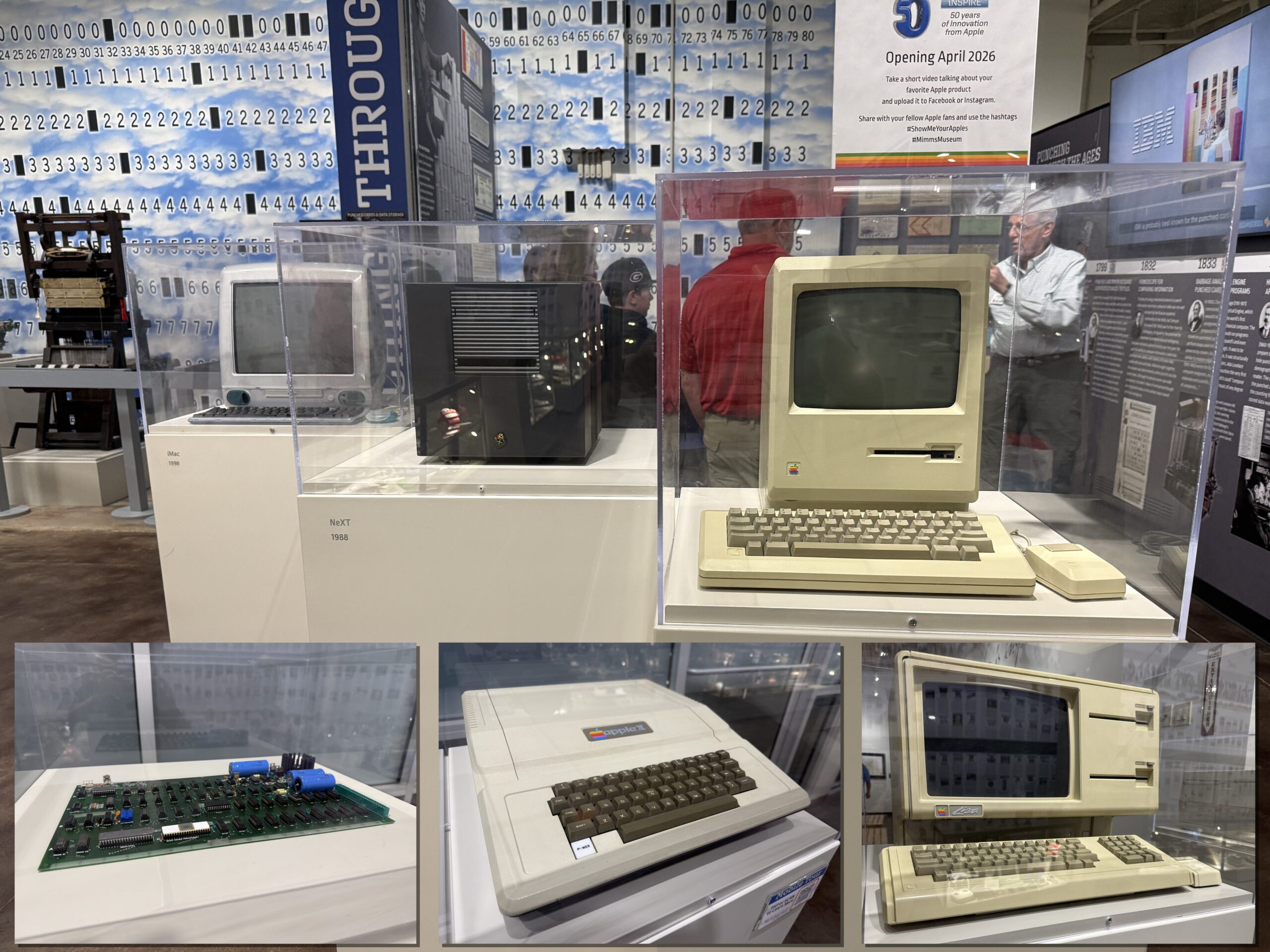
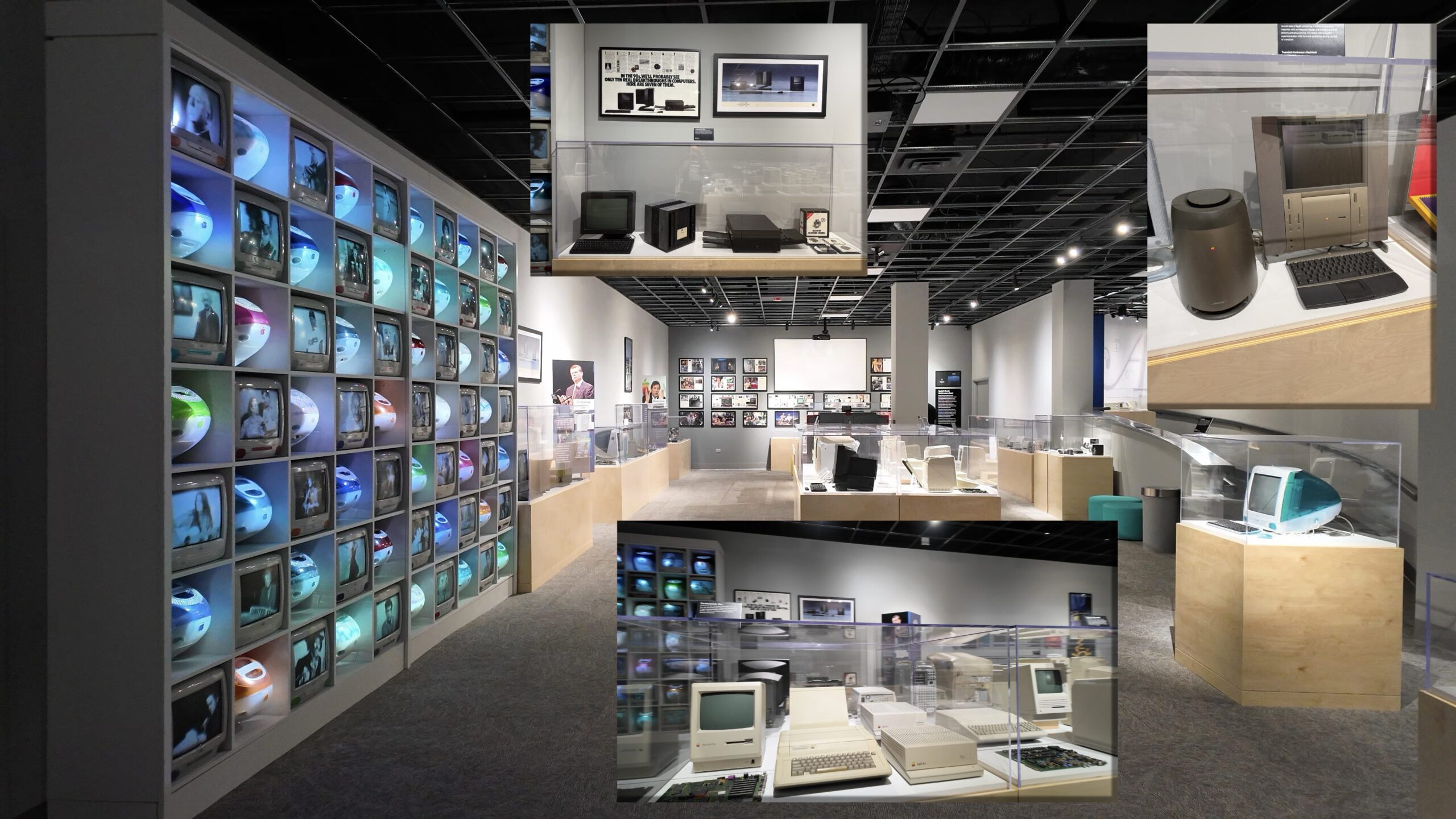
When I first walked in, I was recommended to check out the main hall first, which features several exhibits that are still worth checking out, even if you’re a true Apple enthusiast. When you first enter the main hall and head towards your right, you’ll see a long line of some of the most iconic computers released in history, including the product that started Apple, which is the Apple I. Other notable Apple computers that are on display include: the Apple II, the Apple Lisa, the original Macintosh, and the original “Bondi Blue” iMac. Also, I can’t forget to mention the NeXTcube from NeXT, which was a company that Steve Jobs founded after he left Apple in 1985.
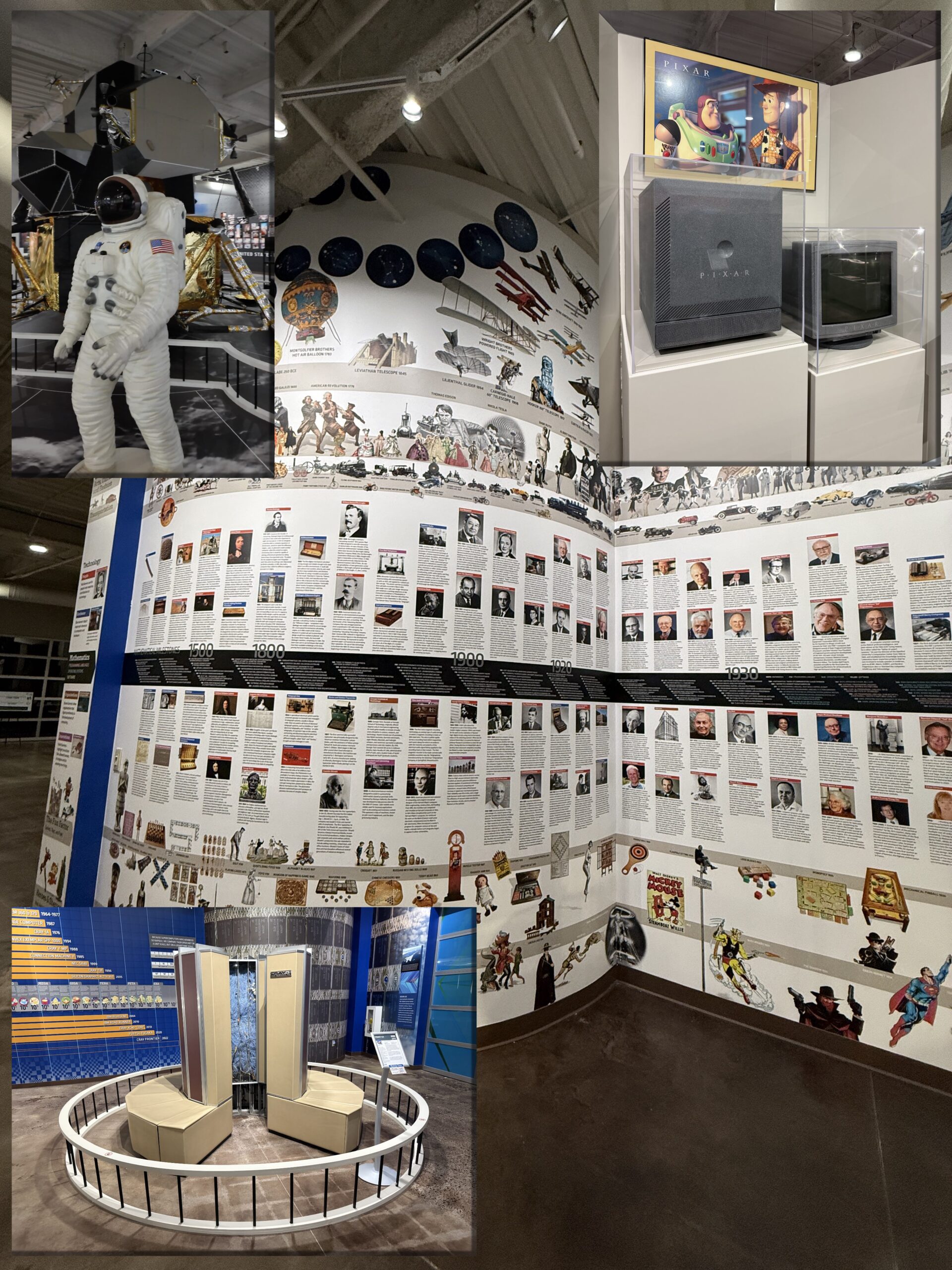
Also across the hall, you’ll find a cumulative timeline that spans the wall. This timeline not only features milestone devices, but it also features important people who contribute to the history of computing, as well as several icons that impact American culture, such as comics, board games, movies, and franchises. Other exhibits you should check out there are the Supercomputing exhibit, which features several milestone supercomputers, including the iconic Cray-1, which is just featured on the American Innovation dollar coin for this year, as well as the Pixar Image Computer. If you’re into astronomy and space as well, then you’ve come to the right place, as there’s even a space exhibit where you can learn about computing in the space era.
iNSPIRE: 50 Years of Innovation of Apple
Section One: The Prehistory and the Founding of Apple
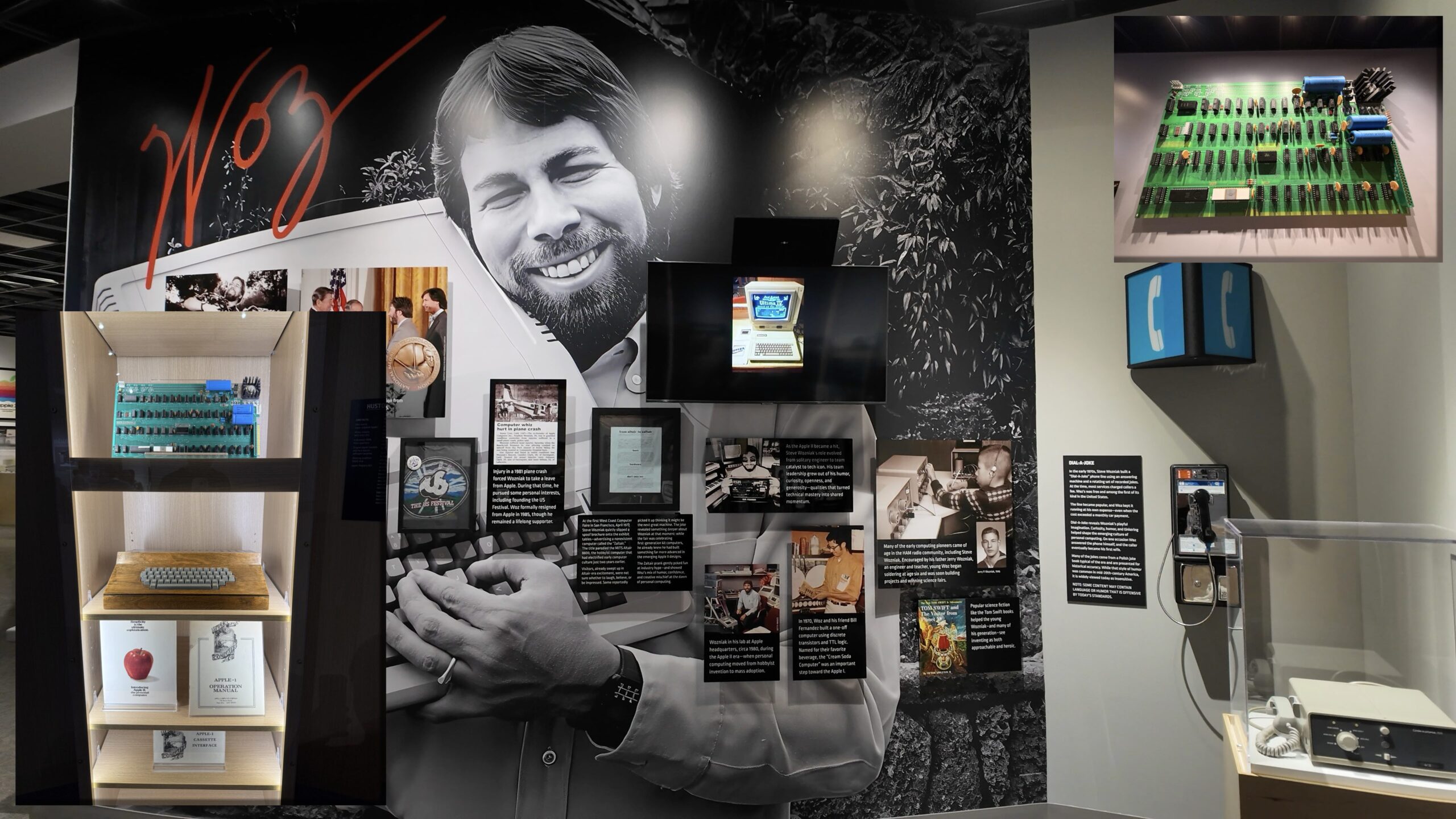
Now let’s move on to the entrée of this experience, which is the newest “iNSPIRE” exhibit. First things first, I couldn’t appreciate how much work the museum has put into its latest exhibit. The exhibit is actually divided into several sections that represent major eras in Apple’s history. It’s the design and details that matter the most and make you feel as if you were walking down memory lane. First, you’ll go through this tunnel before you enter the first section of the exhibit, which explores the pre-history leading up to Apple’s founding in 1976. You’ll learn about the early life of Apple’s co-founders: Steve Jobs and Steve Wozniak, the history behind Apple’s very first logo (believe it or not, it wasn’t the rainbow one that some nostalgics came to know and love), and even the history behind the company’s branding. You’ll also find a large replica of the original Apple I, as well as a section with Apple I’s artifacts. There’s even a phone booth section where you can listen in and hear some jokes that I wouldn’t get right away (disclaimer: those jokes could be rated PG-13, so they may not be appropriate for children).
Section Two: The Early Years Leading up to the Macintosh
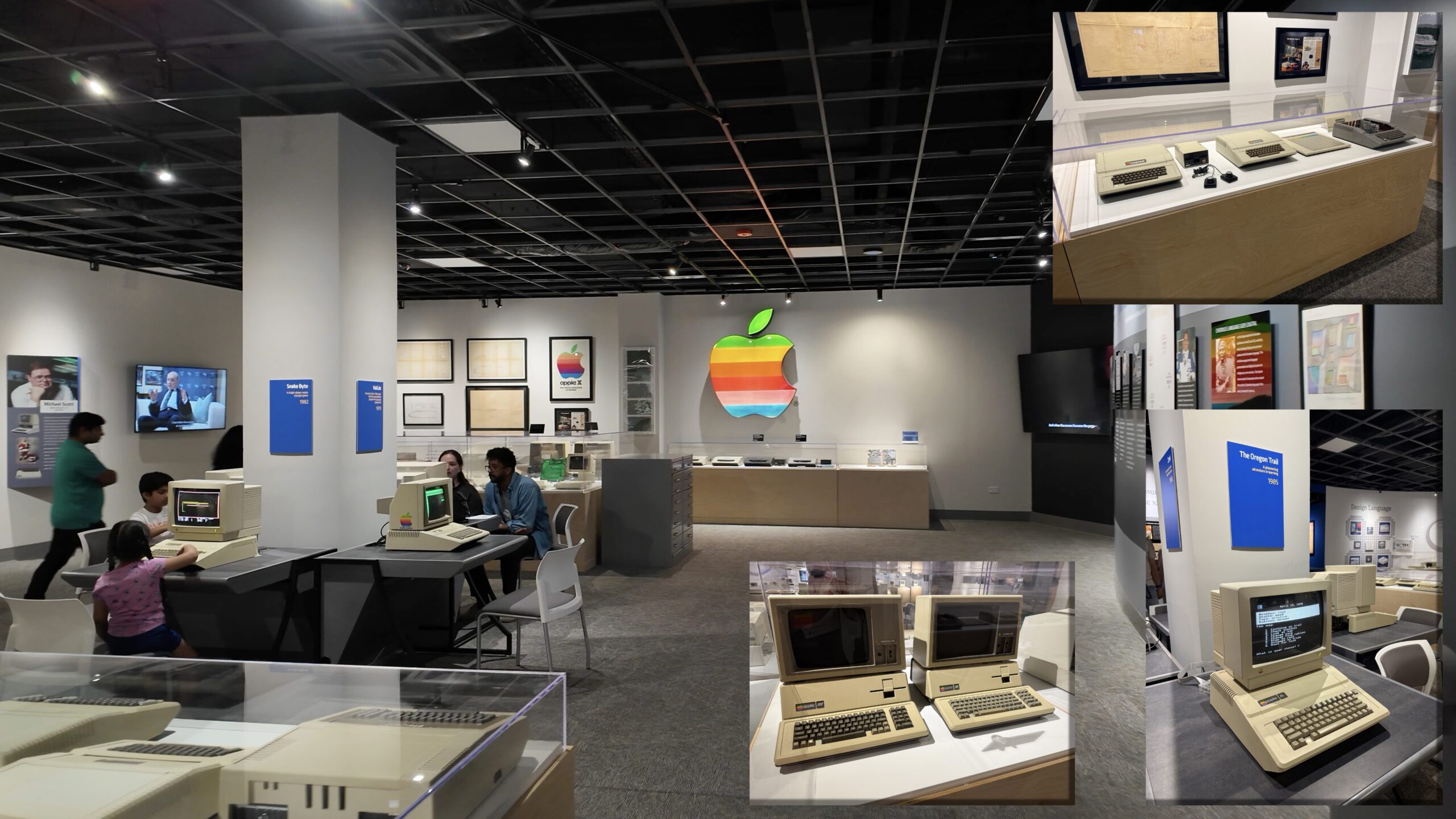
As you make your way towards the next section, you’ll see that it explores the next era, which focuses on the Apple II, the Lisa, and the original Macintosh. You’ll see a wide plethora of models of those computers on display, including the more obscure Bell and Howell Apple II, which was exclusively distributed to the education market, as well as some other prototypes. But the main attraction of this exhibit, in my opinion, has to be the hands-on “mini” labs of both the Apple II and the Macintosh computers where you get to interact with some of the most iconic apps and games for both computers, especially the classic “The Oregon Trail” on Apple II and “Through the Looking Glass”, a.k.a. “Alice” on the original Macintosh.
Section Three: The Era in which Steve Jobs Left Apple
As you make your way down, you’ll find that the next section covers the next era of Apple when Steve Jobs left Apple to form his other company, NeXT. Speaking of which, you’ll find the NeXT cube on display as well as some other Apple II and Macintosh computers from that era, including some prototypes that you may not know of. You’ll also see a ginormous wall of iMac G3 models of various colors throughout the iMac G3’s history.
Section Four: The Mobile Devices and Modern Era
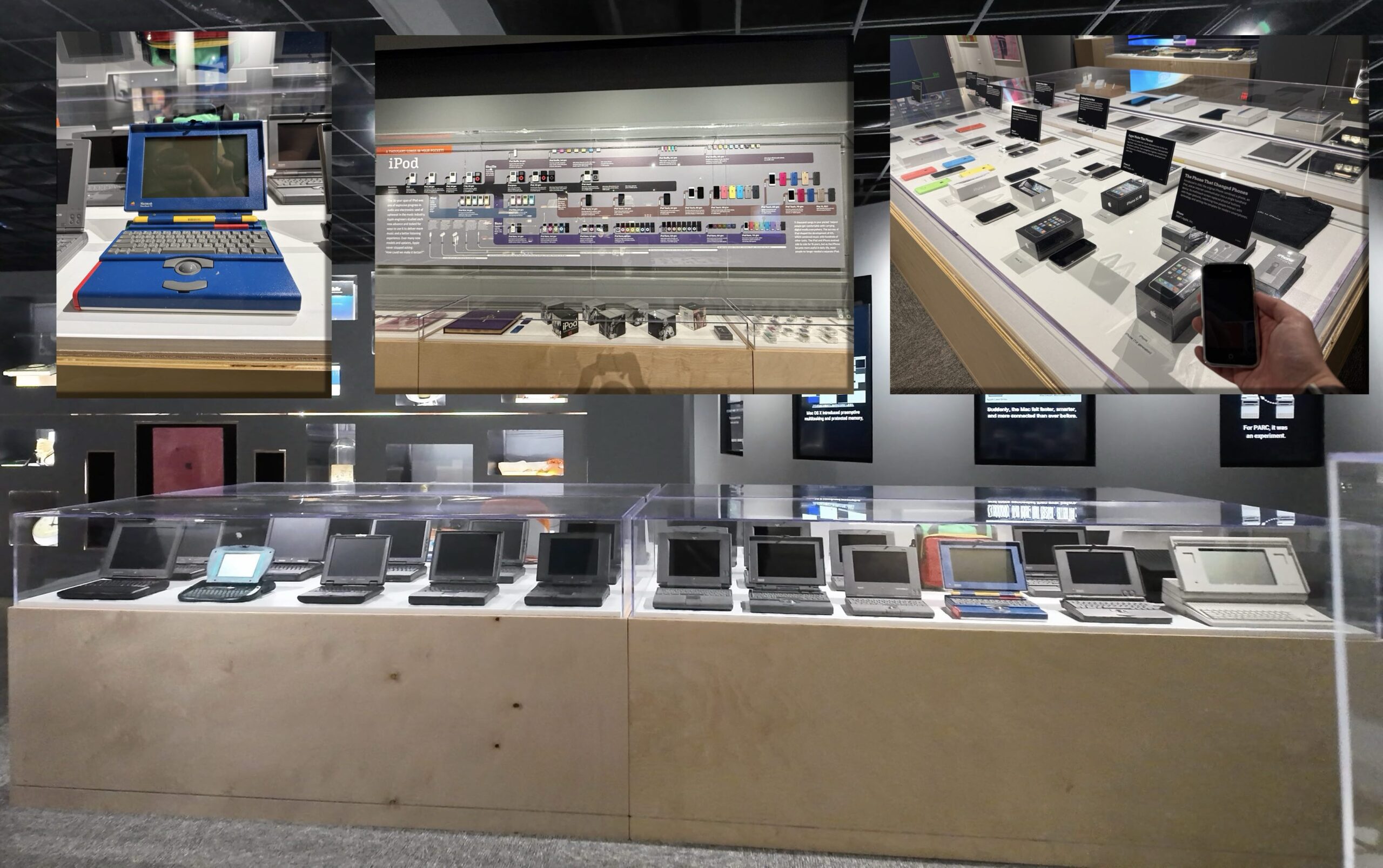
As you make your way through, you’ll see a section that’s dedicated to Apple’s mobile devices, including its laptops, iPods, iPhones, and iPads. One section features a wide range of portable laptops for you to check out; they even have the extremely rare JLPGA PowerBook 170 on display (Stephen Hackett did a video on it if you want to learn more about this special-edition PowerBook). A timeline on the wall showcases the entire history of the iPod with all models on display. Another section even has most iPhone and iPad models throughout their history.
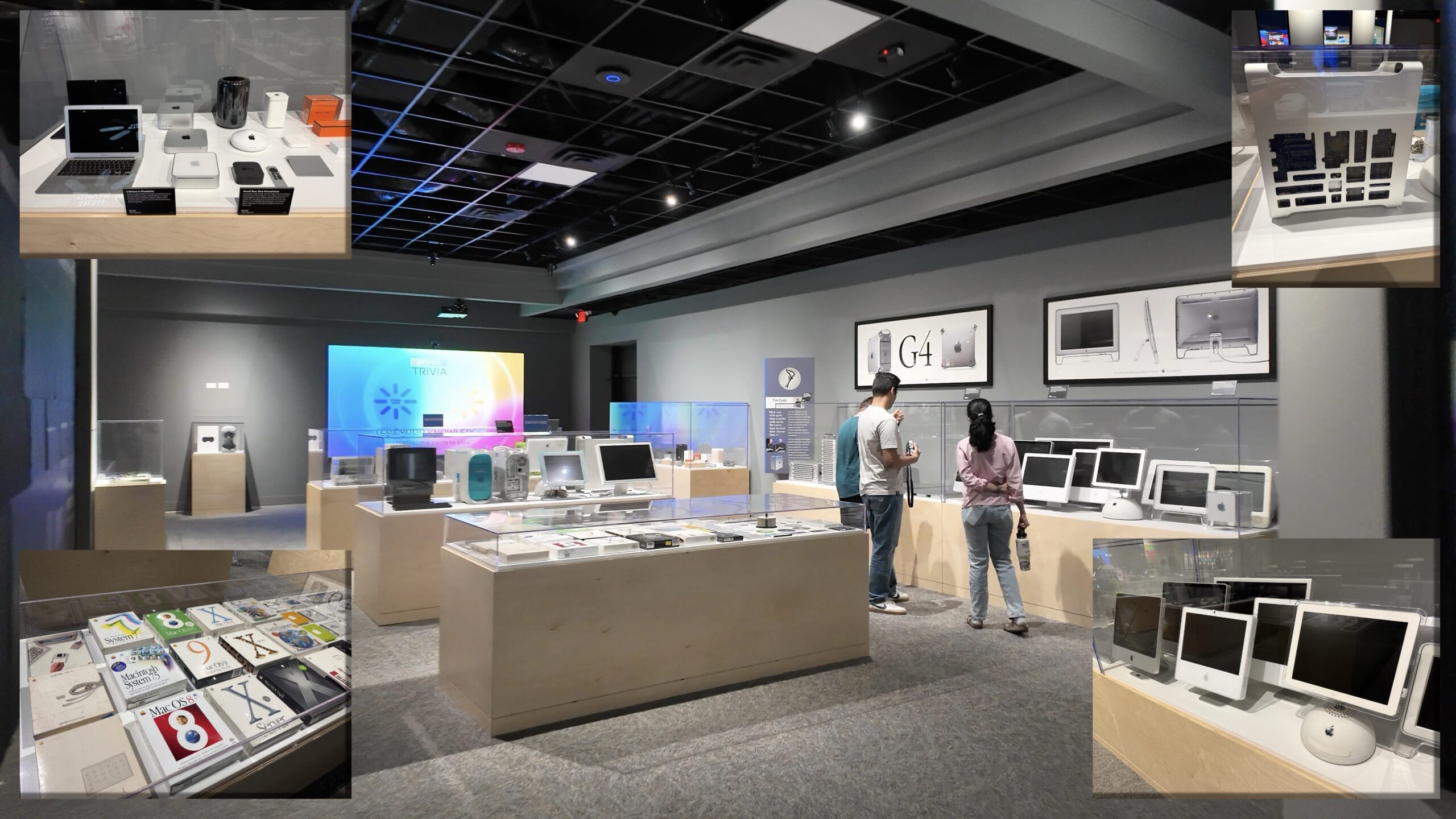
The opposite side of the section features more prototypes, all-in-one desktops, and even several products (including boxed software) from Apple’s era. There’s even a section that tests your knowledge about Apple trivia; however, I found it to be quite finicky as it sometimes wouldn’t recognize my body pose when I tried to select an answer.
Section Five: Apple-Branded Merchandise and Other Miscellaneous Stuff
Now that you have gone through the entire history of Apple after going through those era-oriented sections, the last parts of the exhibit are still as relevant for you to check out. You’ll see a mural that shows many iconic Apple Store locations around the world. As you walk down the hall, you’ll see several Apple-branded merchandise, including this fun teddy bear embroidered with the classic rainbow Apple logo, as well as the original Apple hot-air balloon that made its appearance at Steve Wozniak’s wedding in 1981. There’s even a dedicated display featuring various Apple boxes throughout the company’s history. (Be honest with me; do you still keep your Apple boxes after you unbox them? Frankly, that’s my guilty pleasure right there.)
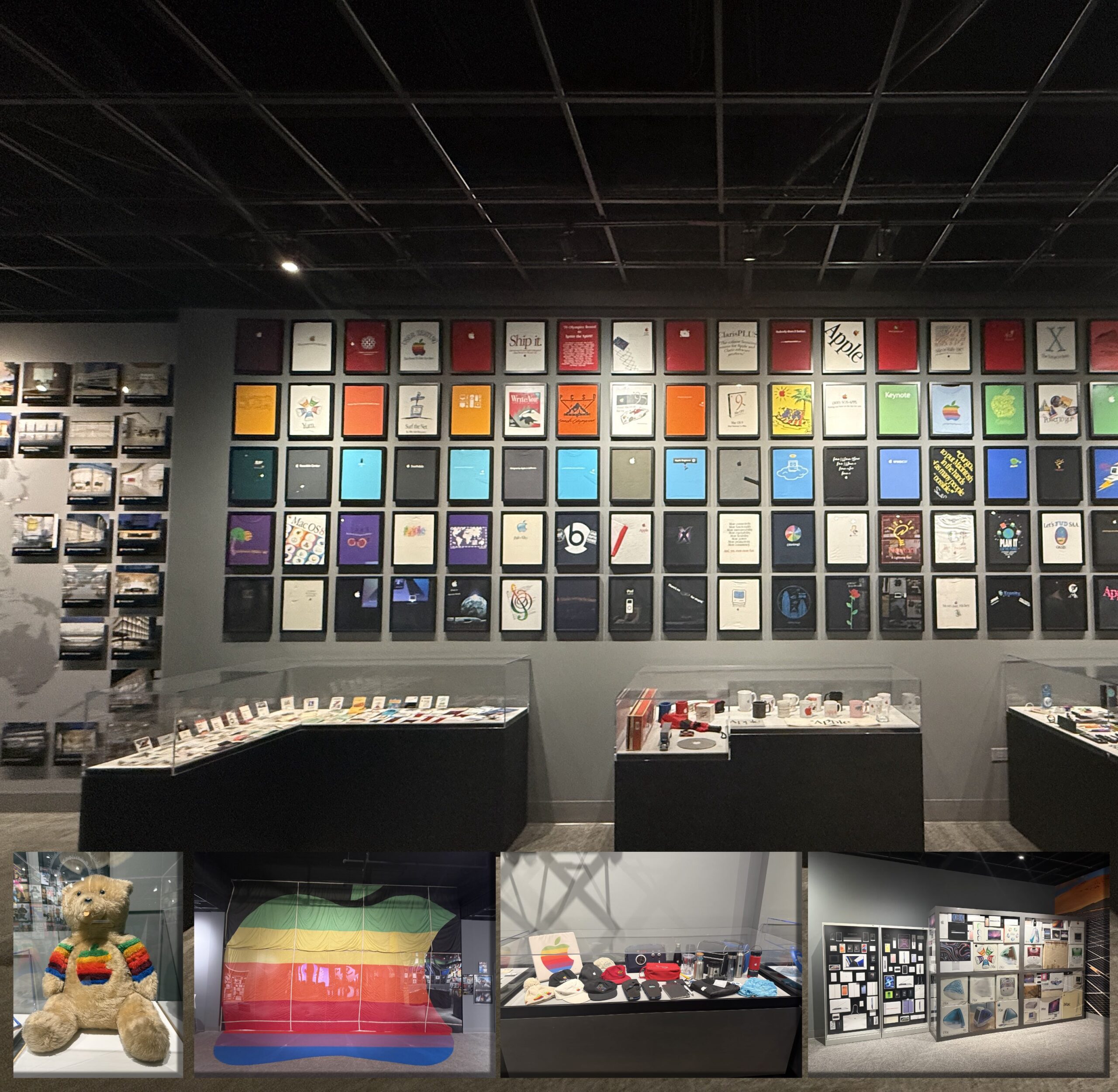
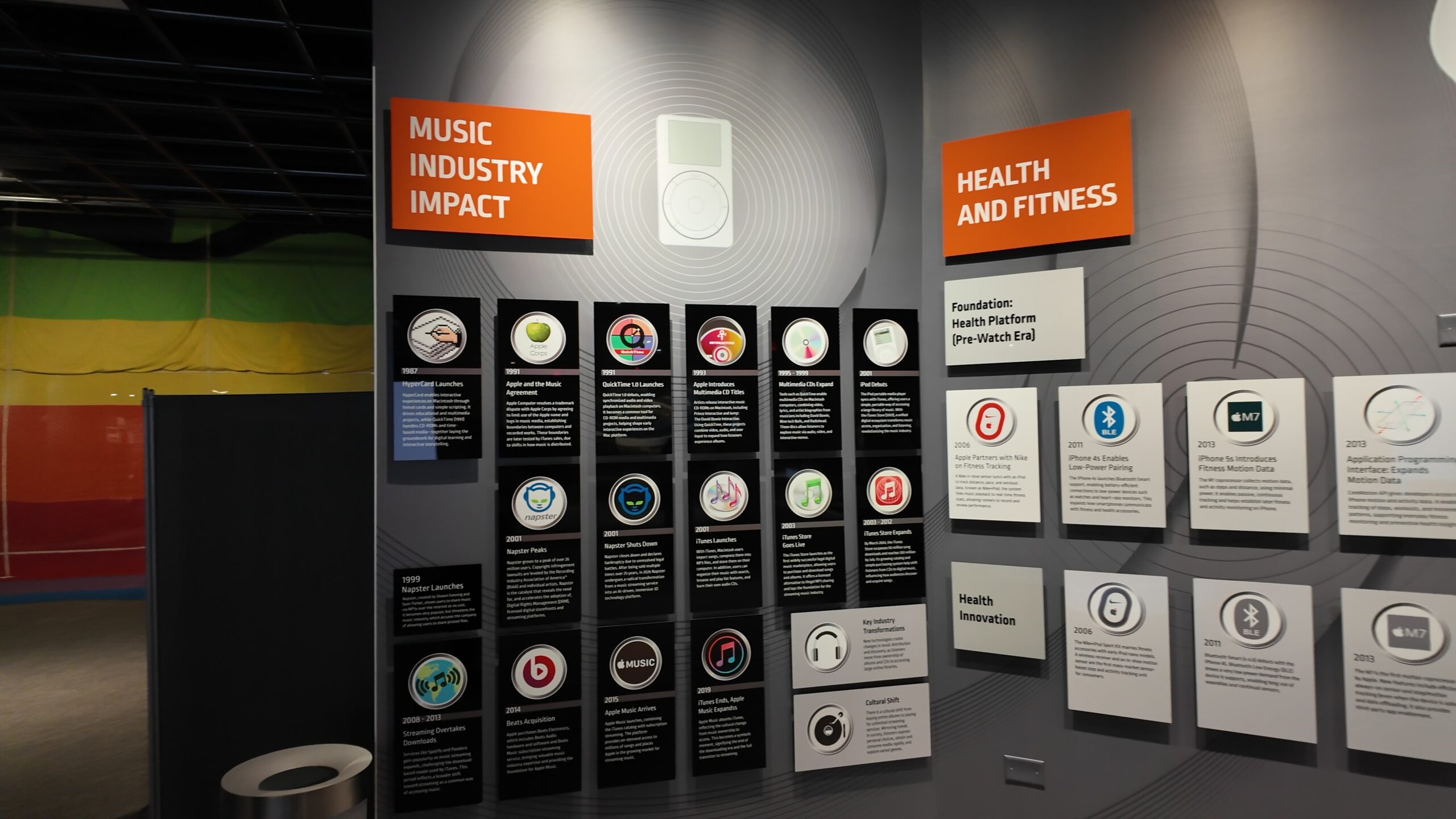
The other side of the wall even features an extensive timeline that illustrates how Apple has impacted both media and health with its products. Across the room, one section of the wall even covers Apple’s current headquarters: the Apple Park.
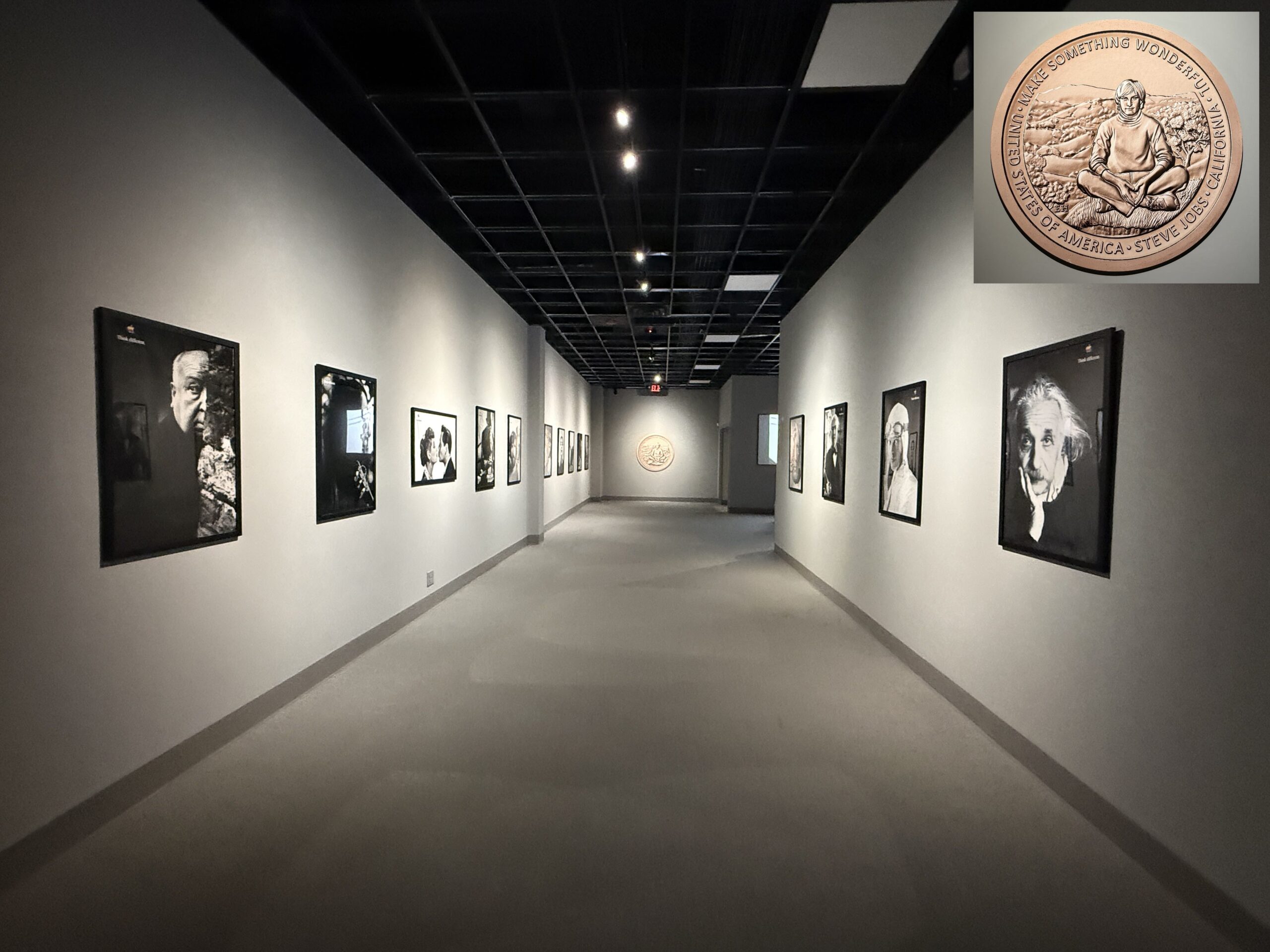
The hallway towards the exit features several iconic “Think Different” posters during the late 1990s/2000s when Steve Jobs returned to Apple and saved the company from bankruptcy. It even plays the iconic “The Crazy Ones” video for you to watch. At the end of the hall depicts Steve Jobs on the American Innovation dollar coin that represents California, which is set to be released next month, so keep an eye out for that.
The Gift Shop
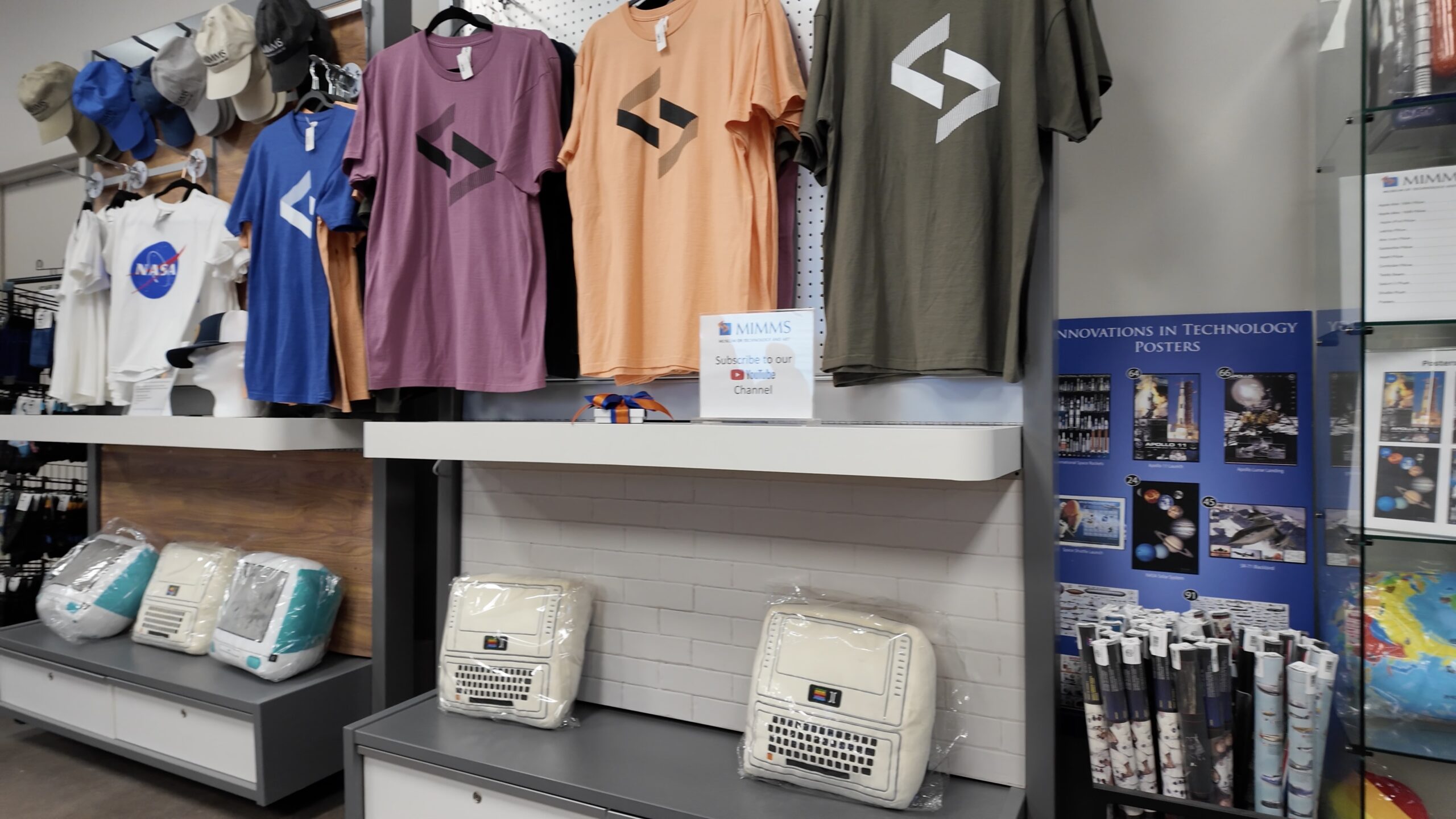
After I finished with the newest exhibit, to wrap up the adventure, I went to the museum’s gift shop. Not only does it feature branded merchandise, but it also offers some Apple-inspired throw pillows from Throwboy and even books, including NYT Bestseller David Pogue’s “Apple: The First 50 Years.” But what I picked up was the “Iconic: A Photographic Tribute to Apple Innovation” book by Jonathan Zufi, which shows several high-quality pictures of various Apple products throughout history. Although it’s an older edition, if I’m not mistaken, I’m glad to have this as a “souvenir.” On your way out, there’s a photo booth for you to take pictures, and you even get to pick a question and respond with a brief video. It could be something like “What was your first Apple product/memory?”
Conclusion
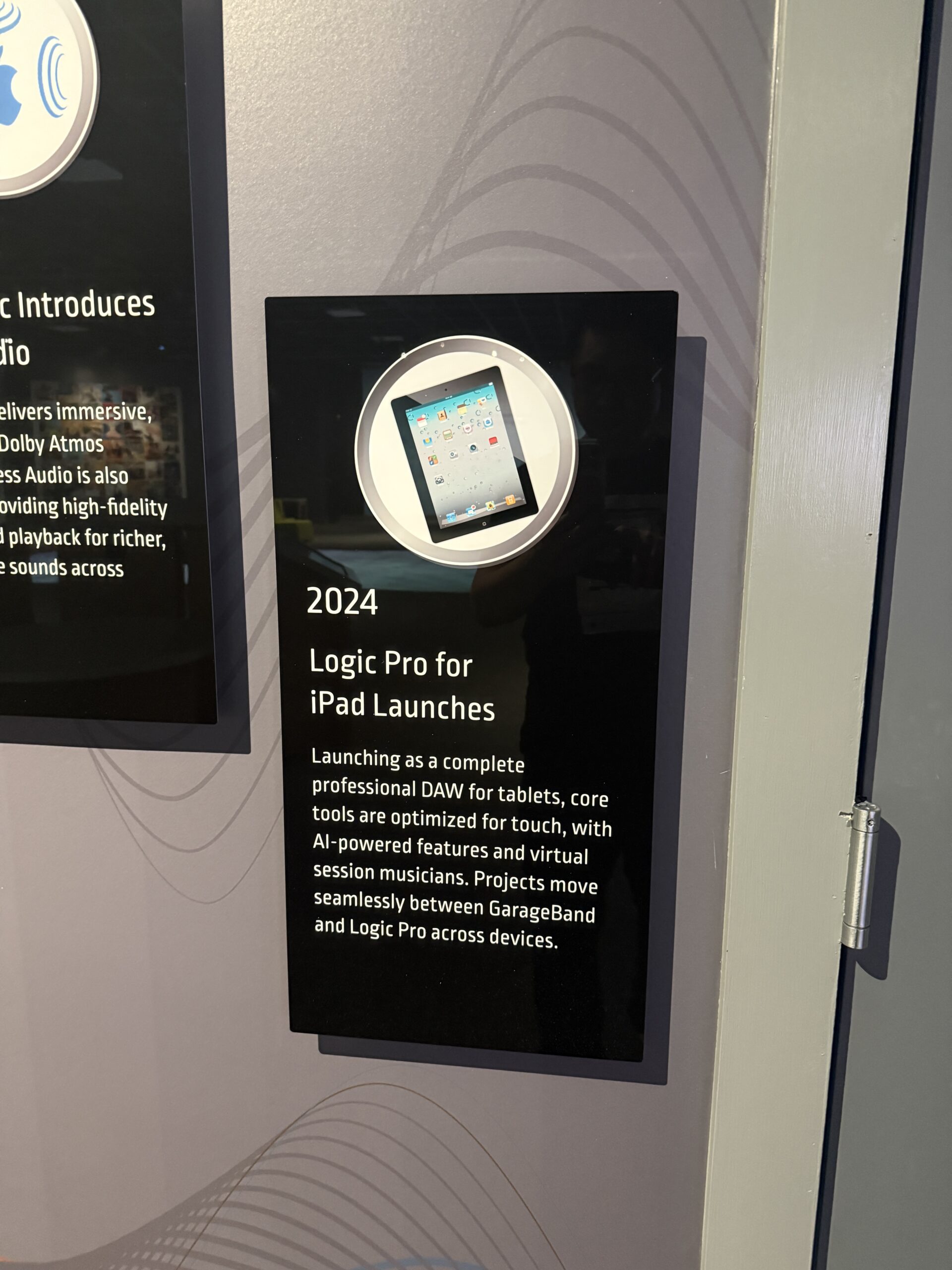
That wraps up my experience after visiting the museum for the first time. I’d rate this museum 4.8 out of 5 stars; if there’s anything that needs improvement, I’d say the trivia section could use some tweaking to recognize body poses better. There’s even one plaque that mistakenly shows an older iPad model (stock photo of iPad 2) to explain the introduction of Logic Pro for iPad, but actually Logic Pro for iPad was introduced on May 9, 2023, according to Apple’s press release.
There was a lot that I could go further into detail, but you’ve got to see the whole museum for yourself. All in all, if you’re planning to visit Atlanta, then this museum is definitely a must-visit for both tech enthusiasts and the rest of us. Best of all, this exhibit is permanent, so no need to worry about missing out on one of the biggest Apple-themed exhibits to ever exist. The museum is located in Roswell, GA, and it opens from 12:00 noon – 5:00 p.m. Wednesday – Sunday.
Thanks for reading this feature! For more content like this, make sure you bookmark this website and follow us on X for more news, deals, and stories about Apple!