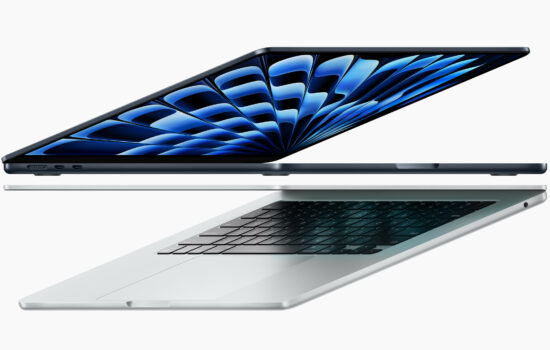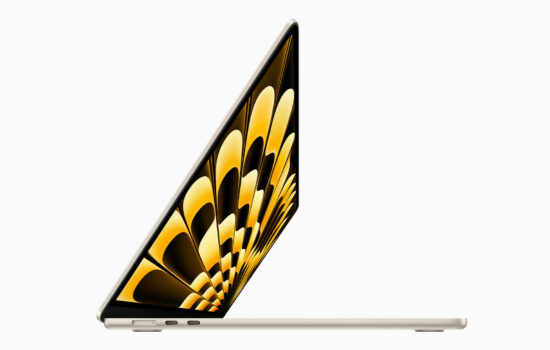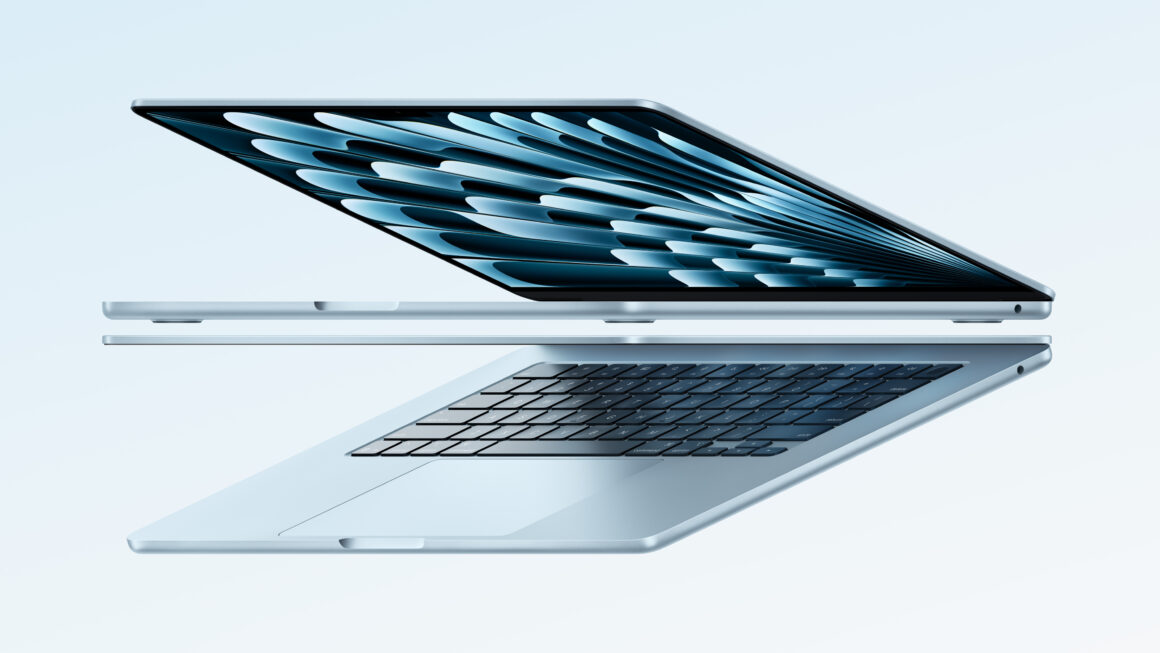
The MacBook Air has been the best-valued laptop for Apple, but it won’t be for long with the imminent introduction of the lower-end “moniker-less” MacBook. Still, the MacBook Air continues to offer great, serious performance at such a low price. Although some people don’t see a refresh for the MacBook Air next week since the company will be announcing too many products, I still believe that Apple will update the MacBook Air next week, given the dwindling stock of the current MacBook Air. After all, Apple updated three Macs with the M4 series back in the last week of October 2024, so anything’s possible. Here’s everything I expect for the next MacBook Air.
Chip
Since the standard M5 chip was introduced on the base 14-inch MacBook Pro last October, I can assure you that the MacBook Air will be updated with the M5 chip. Currently, the 13-inch model comes with the binned M4 chip (10-core CPU/8-core GPU) by default, but you could configure it to the full-fledged M4 chip (10-core CPU/10-core GPU). No matter how you configure it, the 15-inch model comes with the full-fledged M4 chip (10-core GPU). Therefore, it’s likely that we’ll see the same approach as before, where the 13-inch M5 model will come with some binned variant of the M5 chip, but you can still configure it to the full-fledged variant. The 15-inch model will certainly feature the same full-fledged variant of the M5 chip that’s also used in the base 14-inch MacBook Pro.
The key difference between the MacBook Air and the base 14-inch MacBook Pro is that the MacBook Air lacks a fan, which allows for silent operation and passive-cooling, but at a cost of less sustained workloads. The base 14-inch MacBook Pro, on the other hand, continues to have one fan for active cooling and longer sustained workloads. The M5 chip on the base 14-inch MacBook Pro also features faster memory bandwidth, so we could see the same advantage for the M5 MacBook Air as well.
Display and Colors
I expect the displays on the M5 MacBook Air to be the same as the current M4 MacBook Air. Down the road, rumors suggested that a future MacBook Air update could feature improved oxide-TFT LCD displays as a “stop-gap” update before transitioning to OLED, but that update likely won’t come until 2027 at the earliest. I also don’t expect Apple to add the nano-texture display option for the M5 models since the current M4 models lack that option, and it seems that Apple is reserving that option for its higher-end products, such as the iPad Pro, MacBook Pro, and iMac.
Apple recently introduced the Sky Blue color option with the M4 MacBook Air last March, so I don’t expect any new colors for the MacBook Air, as the color options will continue to be more muted and subtle (as opposed to fun colors for the long-rumored entry-level MacBook).
I/O and Connectivity
Both the current 13-inch and the 15-inch models feature MagSafe 3, a headphone port with support for high-impedance headphones, and two Thunderbolt 4 ports, which allow you to connect to up to two external displays regardless of whether the lid is closed or open. I expect the I/O to be the same for the updated MacBook Air.
Although Apple recently introduced the N1 networking chip on the iPhone 17 lineup, the iPhone Air, and the iPad Pro (M5), Apple interestingly didn’t bring that chip to the base 14-inch MacBook Pro with the M5 chip. That laptop still features Wi-Fi 6E and Bluetooth 5.3, and so does the M4 MacBook Air. Therefore, I don’t expect the N1 chip to make its way to the M5 MacBook Air as it will likely continue to feature the same generation of Wi-Fi and Bluetooth.
Price
I expect both the 13-inch and the 15-inch to start at the same starting prices as before ($999 and $1199, respectively). The RAM and storage configurations should be similar to those of the current M4 models.
Conclusion
While the M5 MacBook Air should be a rather spec bump overall, the MacBook Air will continue to be Apple’s all-around laptop that offers the ideal balance between price, portability, and performance.