
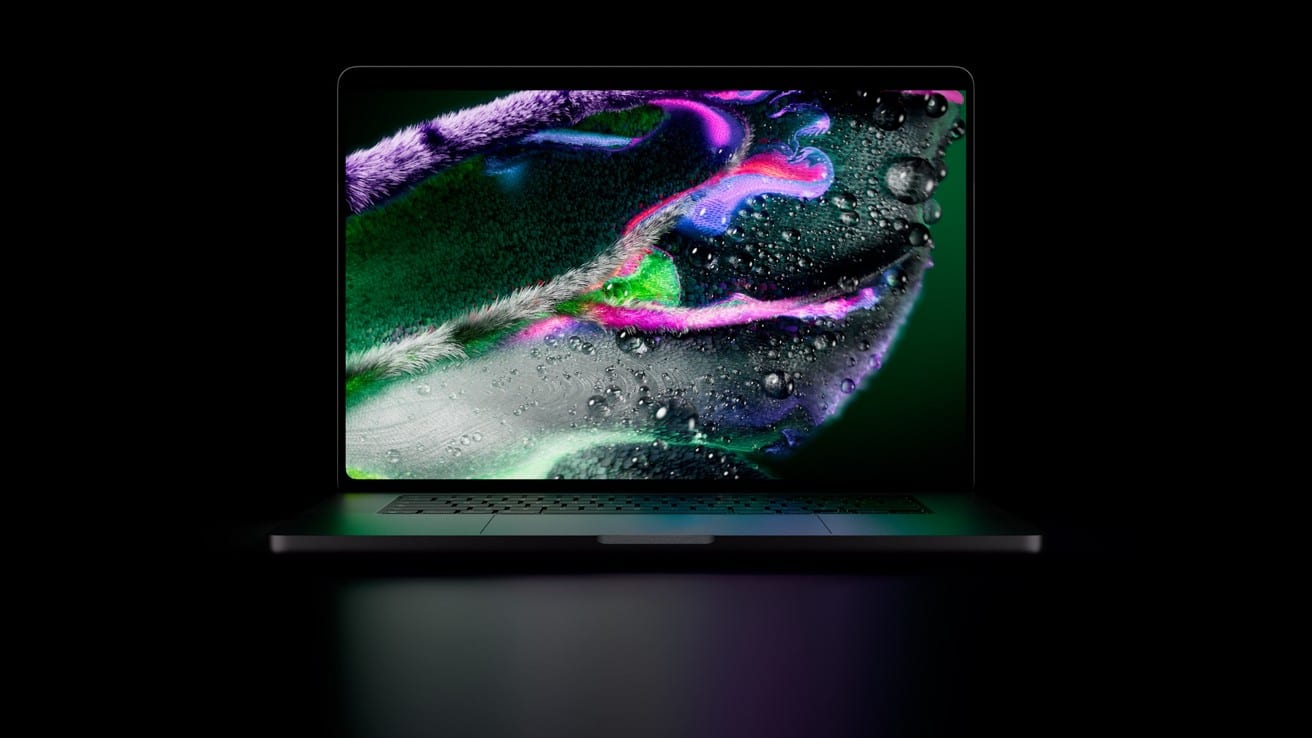
Apple has recently introduced its touchscreen MacBook Pro with PROLED XDR displays. Even though it is the first generation of OLED MacBooks, analysts already have a rough figure of how many MacBooks are expected to be shipped. A report from TrendForce says Apple is expecting to ship around 1.2 to 1.5 million OLED MacBooks by the year 2027.
The display uses tandem OLED, which has a stacked internal layer design. Apple first used it in the 2024 M4 iPad Pro. It’s brighter than single-layer panels and keeps the deep blacks and efficiency OLED is known for. The current market leaders that use the technology are HP, Lenovo, and ASUS. With Apple entering the market, TrendForce expects Apple joining the team will cause a global shift in the market, encouraging more companies to start moving to OLED laptops. By the year 2026, around 40% of overall OLED laptop shipments are expected to increase, then by more than 40% in 2027, according to TrendForce. Also,
What could pull things down? Well, the price could be the biggest hurdle. The 14-inch model starts at $2,899, and it sits alongside the older Mini LED versions of MacBook Pro for now, which TrendForce says could hold back upgrades in the short term. Samsung is also expected to prepare for the mass production of 14-inch and 16-inch display panels. As per the report from 2025, Samsung is expected to produce around 2 to 3 million Display units by the second quarter of 2026.
An earlier report from TrendForce pointed out that OLED could reach up to 12% of the laptop market between 2027 and 2028, partly because of Apple. The next in line for OLED displays are MacBook Air’s but the shortage could push the release of OLED MacBook Airs to 2029 than earlier expected 2027. LG Display, BOE, and TCL CSOT are competing to supply the OLEDs for MacBook Airs.
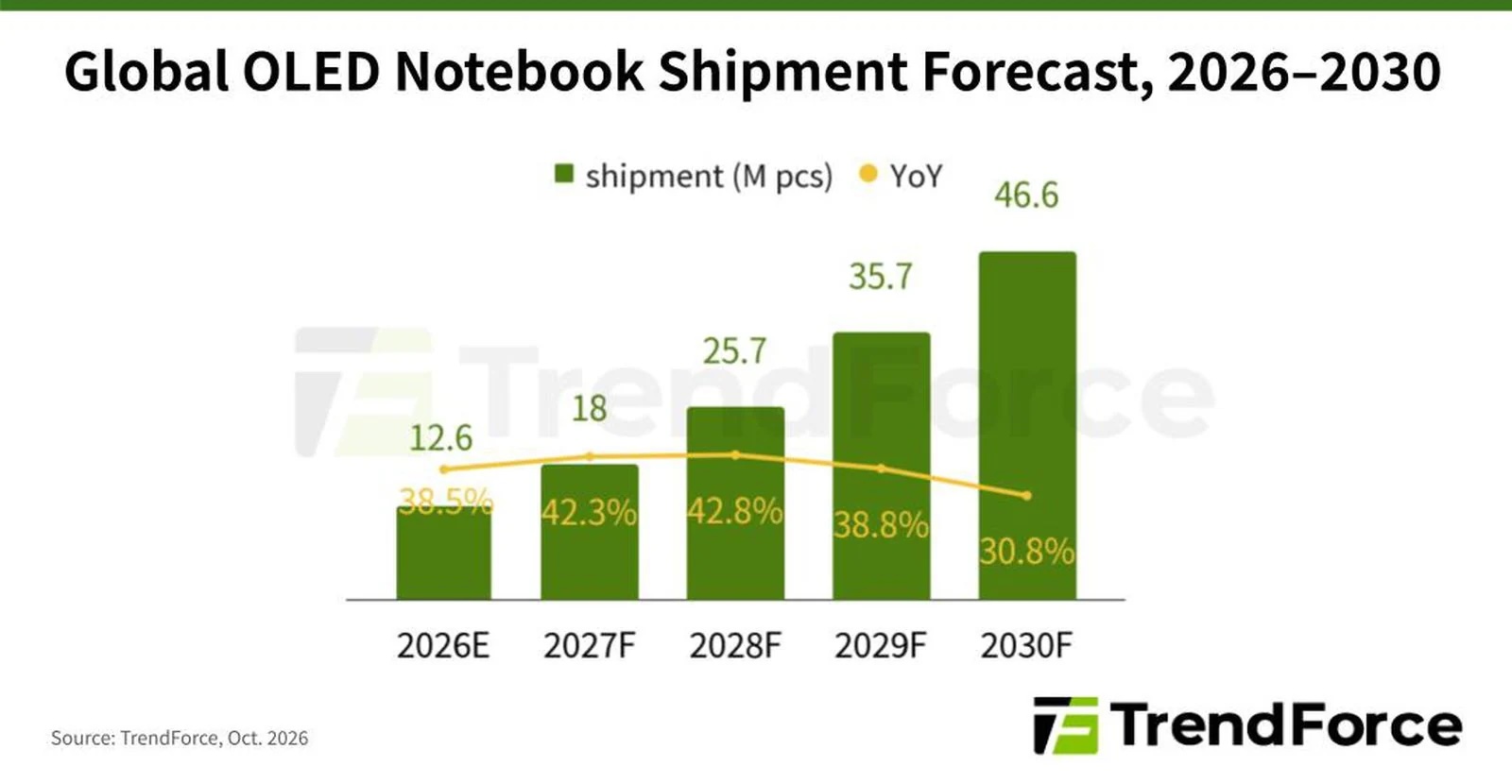
TrendForce projects 46.6 million OLED laptops shipping globally by 2030. As per the report, by the year 2028 growth is expected to peak at 42.8%, then slow to 30.8% by 2030. You can read the full report here.

0 comments
No comments yet. Start a thoughtful conversation.