


I first met Holden and Chris—the CEO and COO, respectively, of Appleosophy parent company Redfruit Media—at CES Unveiled in 2024.
At the time, I was an undergraduate student at the University of Florida working on some news coverage of the event for WUFT-TV, the PBS affiliate owned by the university. It covers my hometown of Gainesville, Florida, and its surrounding cities. It was a small and humble production—I traveled by myself, equipped with only my phone and a handful of peripherals like a selfie stick and microphone.
I explained my work to the two of them, and told them that I was a huge fan of the site. I didn’t think much of it, beyond it being a nice networking opportunity.
Several months later, after I had graduated from UF, Holden reached out to let me know he had capacity to bring on another writer. I was soon to be unemployed and happy to have something to do with my free time.
Through various personal developments, I’ve stayed with the company to pick up articles as needed. Admittedly, I’m very pretentious, and the team has allowed me to do work that satisfies my creative itch—see my very woe-is-me article about how Björk’s Vision Pro app helped me process a breakup and my account of exchanging my Vision Pro after I fell victim to Crackgate.
Now that I’m back at UF for graduate school, I’ve returned to WUFT-TV and been juggling pre-production on several projects for the network. In one of my meetings for another project, I casually mentioned that I had been invited to go to CES with my colleagues from Appleosophy. I suggested making it a small segment for one of my upcoming productions.
“Or I could give you a whole hour on the network to do a special,” my supervisor said.
I actually sighed at this proposition. I was so focused on my other projects that I didn’t want something else on my plate. But the more I thought about it, I realized I’d be stupid not to take it.
Thus, WUFT at CES 2026: Megabytes and Vegas Nights was born.
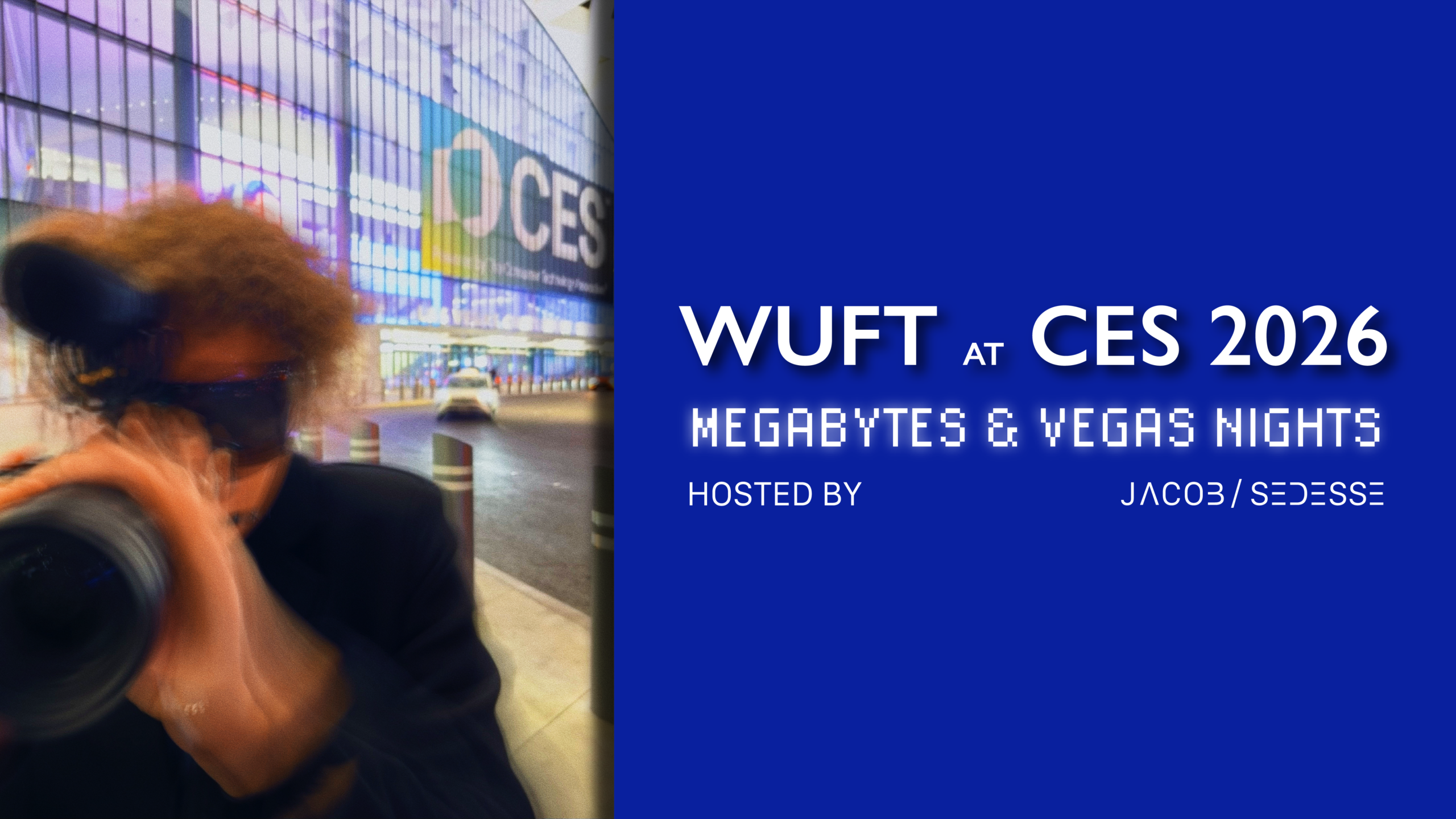
The special was officially greenlit by the network in December with zero frames of footage shot—something they’ve never done for a student project. They placed it on the schedule a few weeks later, giving me a hard deadline to produce an entire hour of television by myself. The only directive they gave me was to tailor it to our Florida-based audience.
So we got to work.
The guys and I began researching what exhibitions I wanted to cover. Meanwhile, I had to arm myself with all the equipment I thought I’d need to properly complete a project bigger than anything I’d ever done. Handling the network side of pitching and programming an entire product of my own was completely new for me—my ex helped me come up with the title and description for DVR listing submissions while we made dinner. I also led a promotional strategy, complete with graphics, social media posts, printed posters and street marketing; the closest thing I’d ever done to that was running for student government.

I’d like to say I didn’t know what I was doing. But I did—something innately told me how it was supposed to turn out. I could see the final product already in my head before I even shot it.
It’s hard sometimes to justify the importance of technology reporting to mainstream outlets and audiences. As a graduate student, I’m researching process journalism and how transparency can affect audience trust. So I turned the camera on myself and our team to showcase our relationship with technology, the industry and CES.
I wanted to show why it matters to us and establish our credibility—while also making it fun to watch for an audience that may not care so much about the latest gadgets. I pitched it as a little bit of a vlog, a little bit of a documentary, and a little bit of a news special all in one. The network had approved it knowing this, but I was still terribly afraid that none of the executives really knew what that meant.
We all set off on our trips to Vegas, filming everything as we went. I filmed myself waking up in the morning and interviewed my mom in the car on the way to the airport. It was grueling. It felt like I couldn’t have a single moment off camera—but I wouldn’t have wanted it any other way. If I missed something good, I knew I’d regret it. It almost started to feel like some sick voyeuristic art project.
And I loved it.

Along with Chris and Holden, we were joined by our colleagues Taylor and Tristen—better known by our followers as our social media creator “Tristendo.” We went to the convention every day, splitting up to capture everything we needed. We set up our Airbnb as a place to host roundtable discussions at the end of every day to debrief. We were all the subjects of the documentary we were producing; I taught the crew how to use all my equipment and we passed it around as needed. I’d use Holden as a stand-in to set shots for myself.
We saw so much cool stuff. Robots that could box or dance, immersive virtual reality tech, and new applications of AI were the obvious highlights. But I upheld my promise to remember my neighbors back home in Florida: I saw the Bluetooth press-on nails from Orlando-based company iPolish and tried a blood pressure monitor for the finger from Palm Beach Gardens-based Wellvii. I also targeted products that would help solve some of our Florida climate problems; I heard about backup power solutions for hurricanes, got up close with some robotic lawn mowers, and interviewed reps for three different robotic pool cleaner companies (I used none of them).
I also made a point to capture the feeling of being at such an event. I interviewed Bridget Carey of CNET, an alum of my program at UF, about her journey to becoming a prolific technology reporter. We even got to pull iJustine aside for a conversation about her career leading to her role as a host of the event.
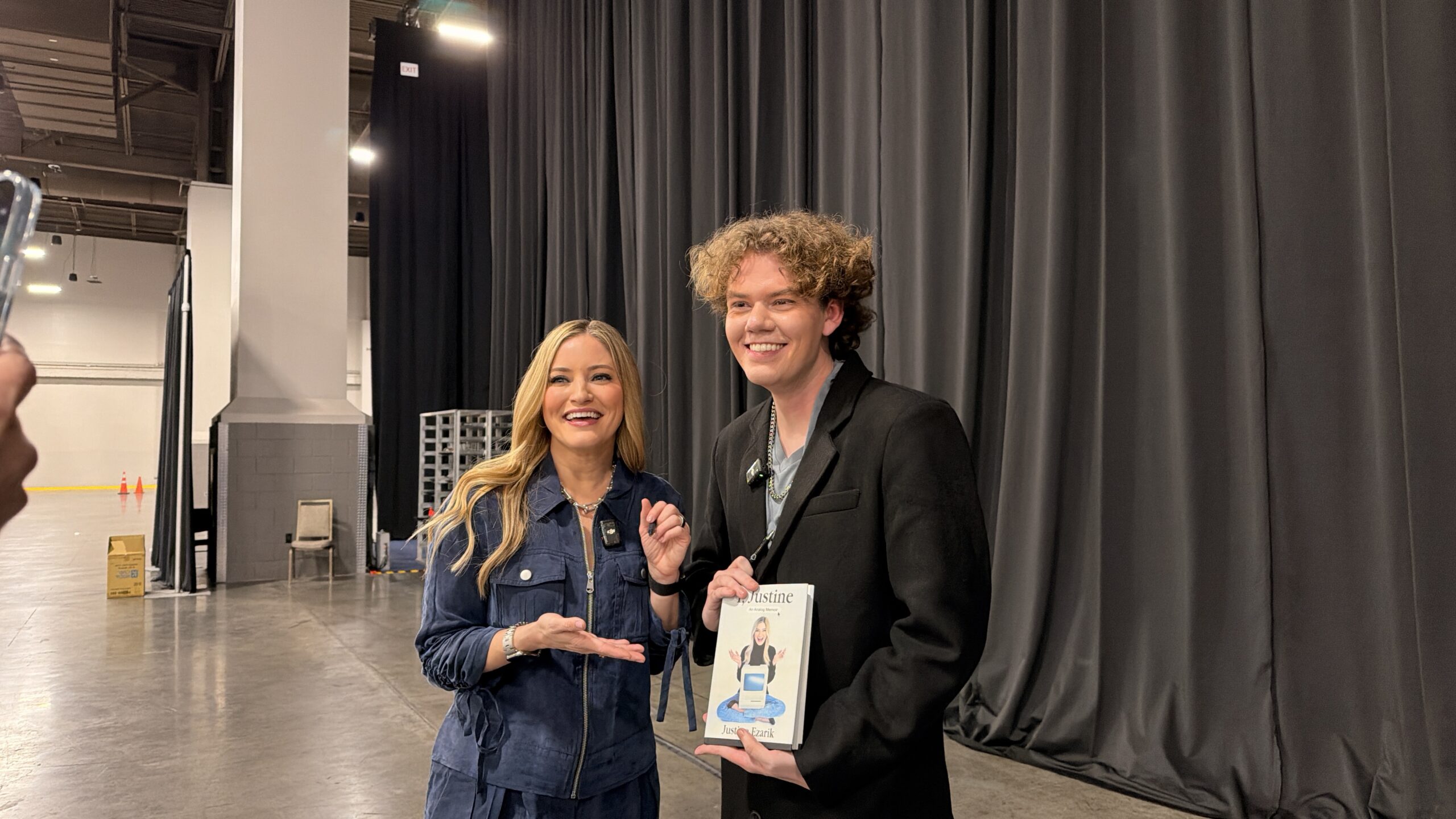
By the time we got back, I had captured nearly 24 hours of mostly 4K log footage accounting for 680 gigabytes of storage. While balancing my work as a graduate student, I spent more than 100 hours editing the special—with the final 20 hours happening in one sitting.
The moment of truth came when I turned it in: no notes from the network. What a relief!
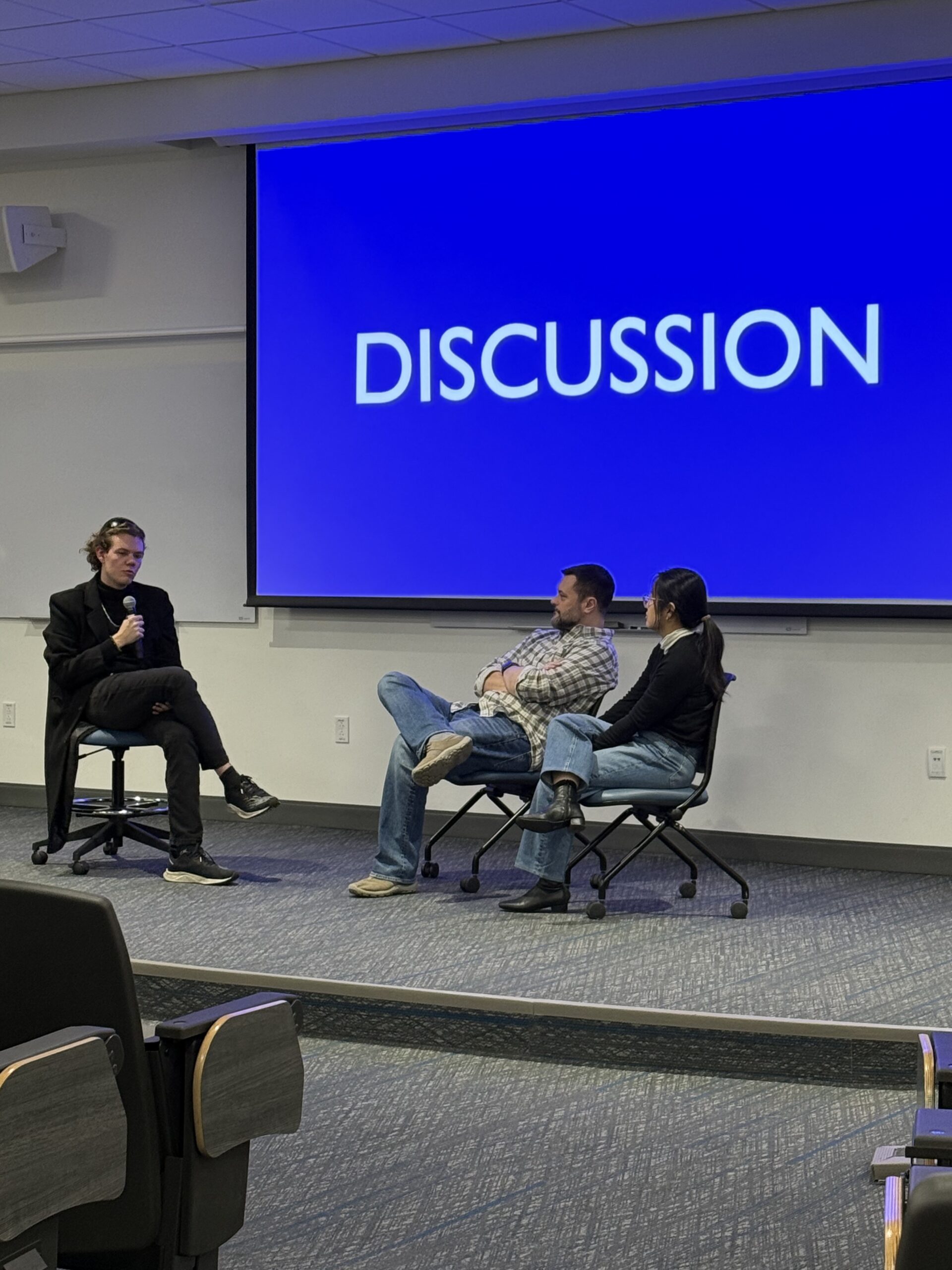
The special aired on WUFT-TV for the first time on Monday, February 23, during prime time with several reruns over the next few weeks. We also held a screening of the film at the Gannett Auditorium in UF’s Weimer Hall, the home of the College of Journalism and Communications. I wanted to imitate the spectacle of going to CES or another tech keynote event to see the latest innovations. I presented the film and followed it with a forum about emerging technology with two professors who work in the field: Andrew Selepak, Ph.D., who is often quoted by national news outlets for his research in social media and AI, as well as mixed-reality researcher Eugy Han, Ph.D.
The feedback has been overwhelmingly positive—not just from friends and family. I’ve been so grateful for all the love I’ve been shown from members of my community who may not have been interested in technology before or known what CES is. Even some of my toughest professors have expressed to me that they enjoyed our work. In this era where so many people are critical of the way technology is headed, it was nice to see that our optimism resonated with people.
That brings us to today. The special has thus far been presented in ephemeral settings only to people in my local community. If the appointed viewing times didn’t work for you or you didn’t have a way to watch broadcast television (or know how), you were out of luck.
Now that this is all over, the special is available on the PBS app for streaming nationally with some minor tweaks. This is the definitive edition—it is objectively better in every way.
For many in the tech community, you might be thinking: “CES was so long ago now!” And you would be right. But for many of us who grew up loving technology, CES was an aspirational event to attend. You can’t just buy tickets to it—you have to be registered media or work in the industry. We have to live vicariously through our favorite influencers, who might prop it up and make it look very polished.
The reality is that underneath all the polish is an enormous, complicated event that is incredibly difficult to make sense of without extensive industry knowledge and planning. This documentary was intended to capture the nuance of how it really feels to be there and cover this event. My peers in the industry who have watched it have told me I accomplished this goal.
After all the work I put in on this, I kind of wished I’d have something poignant to say to end this off, but I really don’t. All I can say is that Chris, Holden, Taylor, Tristen and I had absolute blast on our Vegas trip. I am so incredibly grateful for their help—they truly made this project special. I hope you have just as much fun watching it as we did making it.
Watch the full documentary embedded here or on PBS.org:


