On this day in 2006, Apple had its annual MacWorld conference where the big company not only introduced iLife ‘06 and iWork ‘06, but most notably, it also introduced the very first Macs with Intel processors. This news came several months after Apple officially announced that it would transition its entire Mac lineup from PowerPC to Intel processors at WWDC 2005.
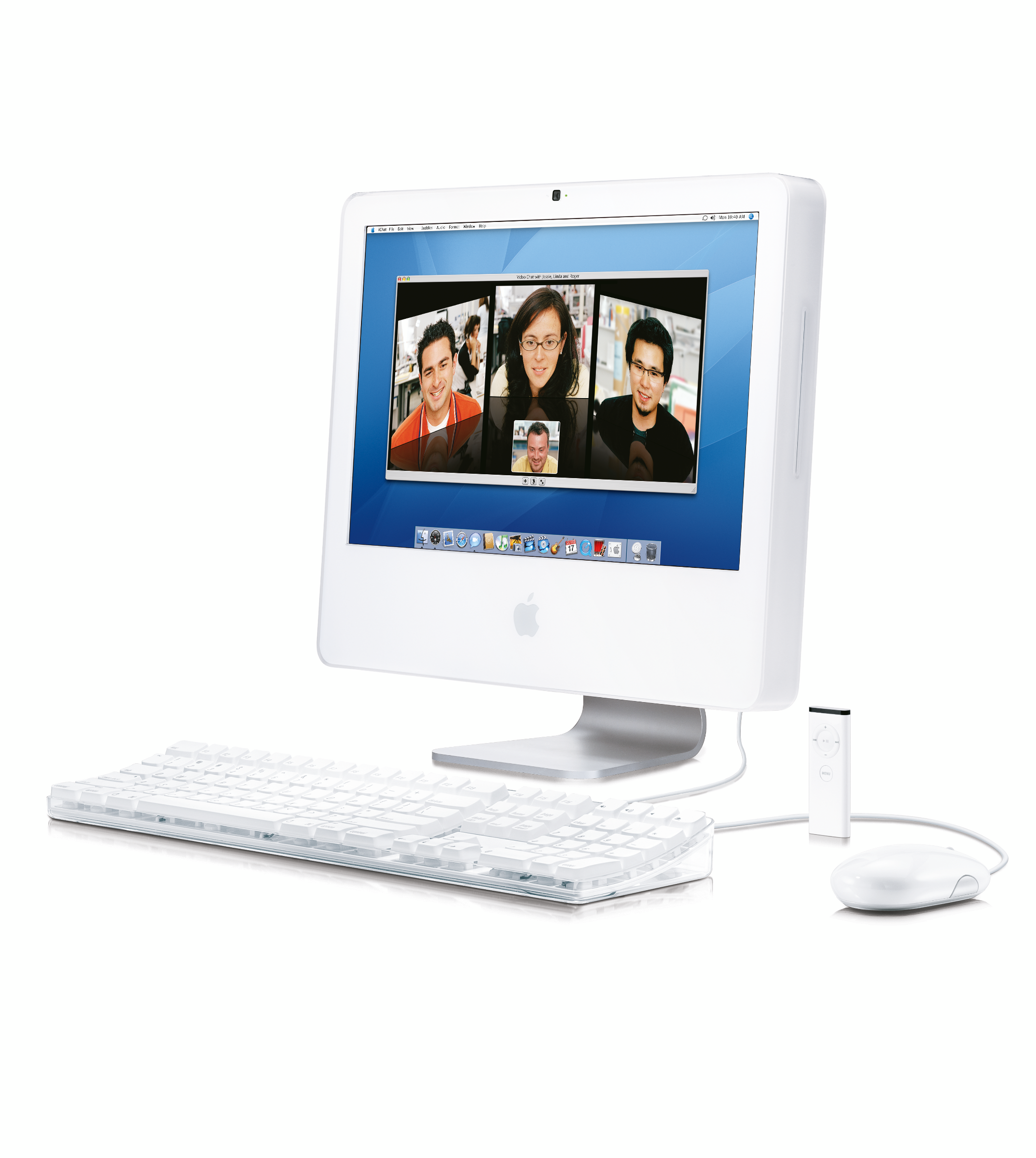
The first Intel-based Mac that Apple introduced at MacWorld 2006 was the iMac. Back in October 2005, the preceding iMac G5 actually got a slight redesign where it featured a tapered back for a thinner profile. This was an improvement over the original iMac G5’s design where the side’s thickness was 2 inches as the back was completely flat. The first Intel iMac offered the same features that the preceding iMac G5 had:
- Same sizes: 17-inch and 20-inch (both 16:10 aspect ratio)
- Same iconic design with its white polycarbonate body and aluminum stand
- Same features, including the built-in iSight camera, Front Row, and Apple Remote, which were introduced in the preceding iMac G5
- Same prices
But what was different was that this Intel iMac featured 2-3x faster performance than the iMac G5 thanks to using the Intel Core Duo processors, which meant that the iMac featured dual-core processors for the first time. Both iLife ’06 and iWork ’06 were Universal, meaning they were developed to run both PowerPC and Intel Macs, and those suite of apps, along with other Apple’s first-party apps such as Safari will take full advantage of Intel’s improved performance. Now obviously, applications would need to get updated to run natively on Intel for performance optimizations, but until then, Apple also introduced Rosetta – a translation technology that lets you run PowerPC applications on Intel Macs. OS X would continue to support PowerPC Macs until Snow Leopard completely dropped support for those Macs. The following version, OS X Lion, dropped support for Rosetta, ending support for both PowerPC-based hardware/software entirely.
Apple also introduced the 15-inch MacBook Pro to replace the previous 15-inch PowerBook G4. It was a brand new name for Apple because the company apparently got tired of overusing “Power” in their product brands, and the company wanted “Mac” in the name of its Mac products, so the end result for Apple’s pro laptop’s name became “MacBook Pro.” The 12-inch and 17-inch PowerBook G4 models remained in the market for a few months until Apple introduced their Intel-based successors, which would replace the iBook/PowerBook lineup with the MacBook/MacBook Pro lineup.
The previous PowerBook G4 models featured the iconic aluminum design that some enthusiasts found nostalgic, and they were ahead of their time. Apple would love to put the G5 processor into the PowerBook; however, even though that processor was faster than the G4, it was actually worse than the G4 in performance per watt. This meant that the G5 was too power hungry for laptops as it would not only drain the battery faster, but it would also generate much more heat. But thankfully, the Intel Core Duo was designed to be substantially energy-efficient, and it allowed the MacBook Pro to be up to four times faster than the preceding PowerBook G4.
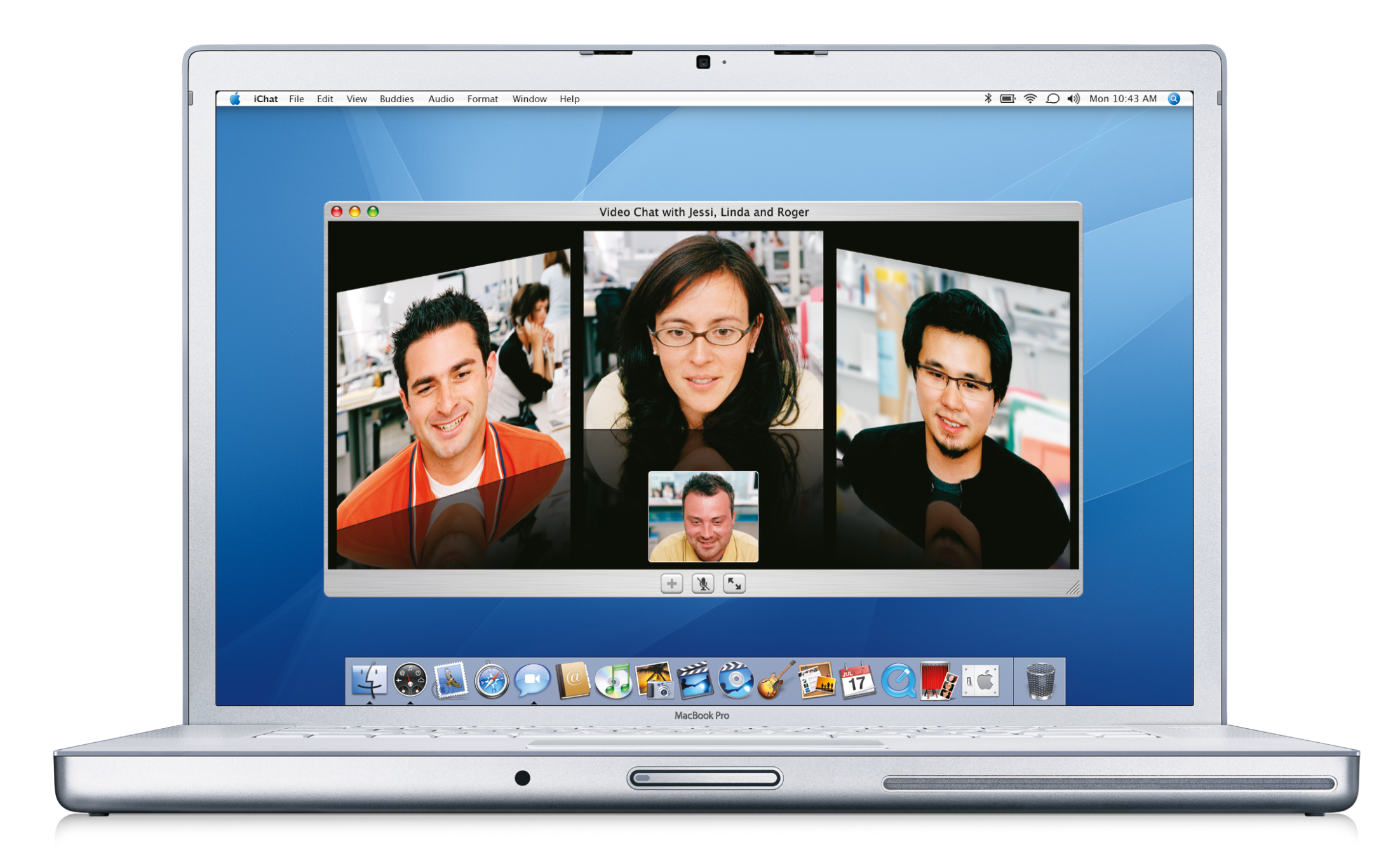
The 15-inch MacBook Pro was not only the fastest laptop that Apple offered back then, but it was also the thinnest. In fact, Steve Jobs claimed it was a hair thinner than the 17-inch PowerBook. Furthermore, this MacBook Pro brought some awesome features. First of all, the 15-inch MacBook Pro actually had a slightly larger/wider 15.4-inch LCD display at a 16:10 aspect ratio that was also brighter than its predecessor. For comparison, its predecessor had a 15.2-inch LCD display at a 3:2 aspect ratio. Soon, the 16:10 aspect ratio would become the standard on all Apple laptops later that year. Additionally, just like the iMac, the MacBook Pro had a built-in iSight camera for the first time, which would make setting up video calls seamless (not to mention the fun you could have with Photo Booth). Most prominently, Apple introduced MagSafe, which was Apple’s patent-pending solution to prevent people or pets from tripping over the charging cable when the laptop was plugged in. The MagSafe connector would just yank right off if anyone were to trip on it, leaving the MacBook Pro intact. This was an ingenious feature that would save thousands of MacBooks from damage (and would save Apple time from repairing any damaged MacBooks in that case). Interestingly enough, when the 15-inch MacBook Pro was introduced, it would come with the 1.67 GHz and 1.83 GHz Intel Core Duo processors at $1,999 and $2,499, respectively. However, Apple actually launched both of those models with even faster processors than previously announced, specifically 1.83 GHz and 2.0 GHz at $1,999 and $2,499, respectively. The 17-inch MacBook Pro would be announced later in April to replace the 17-inch PowerBook, and the MacBook would be announced in May to replace both the iBook models and the 12-inch PowerBook.
You may watch the whole MacWorld 2006 keynote below:
We hope you enjoy this blast from the past as the switch to Intel is still as relevant in Apple’s history.